Dog Poisoning Substances
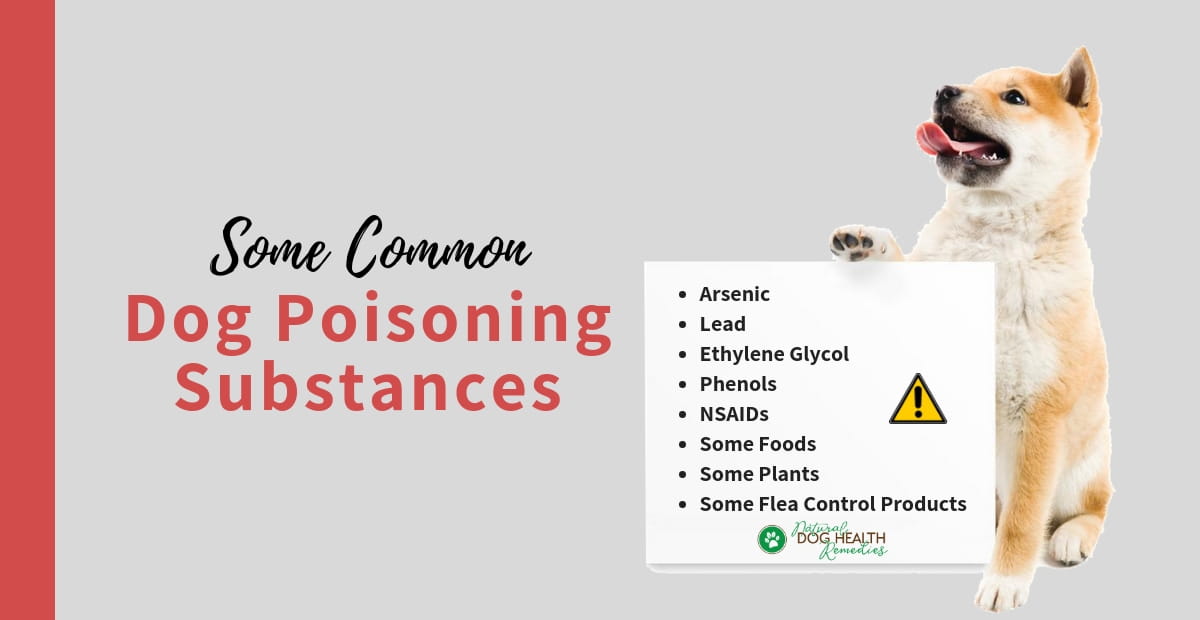
Substances that are poisonous to our dogs are everywhere. They can be found even in your own home since there are quite a few substances that can cause dog poisoning. Here are the most common ones:
Some Common Dog Poisoning Substances
Arsenics
Arsenics can be found in insecticides, herbicides, pesticides, wood preservatives, detergents, etc.
Signs of Poisoning in Dogs
- vomiting
- restlessness
- stomach pain
- diarrhea (often bloody)
- lethargy
- dehydration
Arsenics are highly toxic and fast acting. Signs of poisoning usually occur within 30 minutes of ingestion and death occurs in a few hours. Therefore, if you suspect that your dog has ingested arsenic, don't wait. Rush him to a veterinarian hospital right away.
Lead
Lead can be found in old paints, insecticides, ceramics, batteries, gasoline, etc.
Signs of Dog Poisoning
- seizures
- lethargy
- vomiting
- thirst
- inability to coordinate voluntary muscle movements
Lead in the stomach or intestines may show up on x-rays and prompt veterinary care can reverse most symptoms. If a dog that has ingested lead is left untreated, death may occur several weeks after signs of poisoning begin.
Ethylene Glycol
Ethylene glycol can be found in antifreeze, windshield de-icer, brake, and transmission fluids, etc.
Signs of Poisoning in Dogs
- staggering and incoordination
- excessive thirst and urination
- nausea
- vomiting
- seizures
It takes only about 1/2 teaspoon per pound for a dog to get a toxic dose of ethylene glycol (and less for a cat). The poison affects both the animal's neurological and kidney function, but the most severe damage usually involves the kidneys.
Therefore, the antifreeze should be flushed through the animal's system as fast as possible. Seek veterinary help immediately. If treatment is provided less than 4 hours after ingestion, absorption can be prevented by induced vomiting and stomach wash.
Phenols
Phenols are contained in Lysol, fungicides, herbicides, and wood preservatives.
Signs of Poisoning
- drooling
- vomiting
- dizziness
- hyperthermia
- staggering
- convulsions
- coma
Phenol poisoning can occur through skin absorption or through ingestion and it can be fatal. If you know that your dog has ingested phenol, give him evaporated milk and olive oil to prevent absorption (if poisoning is recognized early on). If exposure is on skin, wash the dog with soap and water. Take him to a veterinarian immediately.
Flea Control Products
Flea products, such as flea shampoos, powders, collars, sprays and dips, that contain organophosphates and carbamates can cause irregularities in the transmission of nerve impulses.
Dogs are less sensitive to the chemicals than cats, but they can also show adverse reaction, especially if a high dosage is used.
In fact, if more than one method is used on a dog (e.g. dipping a dog and then putting a flea collar on), the result can lead to illness or death.
Signs of Poisoning
- drooling
- diarrhea
- lack of coordination
- difficulty in breathing
If you suspect your dog is having an adverse reaction to a flea product, bathe him thoroughly to remove the toxins. Take him to a veterinarian immediately for an antidote.
Some flea products contain pyrethrins which are less toxic than organophosphates and carbarnates, but some dogs may react with symptoms like increased salivation, vomiting and depression.
Unfortunately, there is no antidote to pyrethrins - take your dog to a vet if you suspect pyrethrin poisoning.
NSAID Toxicity
Although non-steroidal anti-inflammatory drugs (NSAIDs) are often prescribed by veterinarians as a pain relief for arthritis and other conditions in dogs, do remember that human dosages of these drugs are much stronger than animal dosages.
Therefore, as a general rule of thumb, don't give human medications to your pet, and keep all human medications out of the reach of your pet.
An overdose of NSAID will decrease the production of mucous in the stomach. Mucous is like a protective layer that coats the stomach to shield the stomach walls from the acids it secretes. As such, a decrease in mucous production may result in stomach ulcer formation.
Moreover, NSAIDs can decrease blood flow to vital organs, particularly the kidneys. Insufficient blood supply to organs can of course result in significant organ damage.
Signs of Poisoning
- stomach upset, diarrhea
- vomiting
- seizures
- unsteadiness
- paralysis
If your dog has ingested NSAID, take him to a vet immediately. The vet may induce vomiting, followed by giving sodium bicarbonate to cause alkalinisation of the urine to increase excretion of salicylates. Antacids may be required to counteract gastric irritation.
Some Human Foods
Some common human foods can be dog poisoning substances as well. For example:
Chocolate
Chocolate contains theobromine which is poisonous to pets, especially to small dogs. The toxic dose of theobromine for pets is 100-200mg/kg. However, reports from the ASPCA (American Society for the Prevention of Cruelty to Animals) have indicated that even much lower doses (20 mg/kg) can cause problems.
Theobromine triggers epileptic seizures in the animal, and can cause cardiac arrest and death. Additionally, chocolate irritates the gastrointestinal tract, leading to internal bleeding.
Signs of Poisoning
- nausea, vomiting, diarrhea
- excitability
- restlessness
- muscle tremors
- difficulty in breathing
- seizures
- cardiac irregularlity
- coma
Please click here for more detailed information on this topic.
Raisins and Grapes
 Raisins and grapes can cause acute kidney failure in dogs.
Signs of Poisoning
- vomiting and diarrhea (You may find semi-digested grapes/raisins in the dog's vomit, fecal material or both)
- loss of appetite
- lethargy and depression
- excessive thirst
- abdominal pain
Please visit this page for more detailed information.
Xylitol
Xylitol is a sweetener used in a lot of human products, such as sugar-free gums, candies and some baked goods.
However, xylitol is a definite no-no for dogs because ingestion of this substance can make the dog release excessive insulin, causing hypoglycemia (low blood sugar) in the dog, which in turn can result in shock and liver failure.
Signs of Poisoning
- vomiting
- lethargy
- lack of coordination
- pale gums
- body tremors
- seizure
- unconsciousness
- cardiac irregularlity
If your dog has ingested food containing xylitol, take him to the vet immediately. The vet will usually induce vomiting. He may also give your dog activated charcoal to absorb the stomach contents.
Depending on your dog's condition, additional treatment such as a dextrose intravenous drip may be needed to increase your dog's blood sugar levels.
Please also click here for more information on which human foods are safe and which are unsafe for dogs.
Some Plants Can Be Dog Poisoning Substances Too
There are quite a few plants, both inside the house and out in the yard or in the wild, that are poisonous to our pets. Please be sure to keep these household plants away from your dog!
These plants may cause heart problems if ingested:
- Lily of the Valley, oleander, azalea, yew, foxglove, rhododendron
These leaves contain substances that can produce kidney failure:
- Rhubarb leaves and shamrock
Watch this ASPCA video for information on 17 common plants poisonous to your dog:
ReferencesEldredge, et al. Dog Owner's Home Veterinary Handbook 4th edition (Wiley Publishing, 2007).
R.H. Pitcairn, The Complete Guide to Natural Health for Dogs and Cats (Rodale, 2005).
ASPCA Animal Poison Control