Raw Diet for Dogs
(FTC Disclosure: If you make a purchase via a link on this page, I may receive a small commission, at no added cost to you.)
Overview
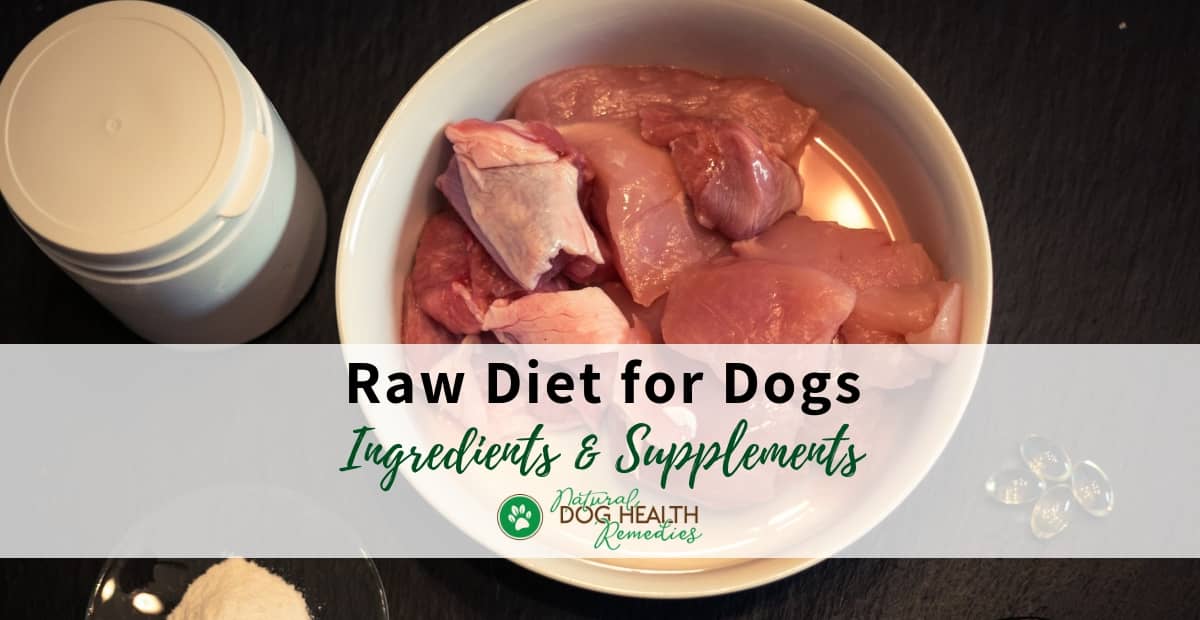
More and more holistic veterinarians and veterinary nutritionists are now advocating feeding natural, fresh, and preferably raw foods to dogs. Some dog parents embrace raw diets wholeheartedly, while others are hesitant to feed raw foods, especially raw meat and bones, to their dogs.
This page looks at the pros and cons of raw diet for dogs, and tries to answer some of the questions that you may have about feeding your dog raw foods.
Hopefully, it will help you make an educated decision as to whether or not raw diet is the way to go for your dog.
Pros and Cons of a Raw Diet for Dogs
Pros
- A raw diet for dogs is close to the natural diet originally consumed by our dogs' ancestors.
- Raw meat contains a lot of protein and is rich in many other nutrients such as enzymes, minerals, vitamins, and essential fatty acids that are needed by dogs.
- Raw meat is more easily digestible than kibble for dogs. As such, the nutrients in raw foods are more readily available for dogs.
- Raw whole foods are full of vitality and energy.
- Foods that are cooked are more likely to cause allergies because high heat breaks down the cellular integrity of the food, exposing new antigens that weren't present in the original raw form.
- Many dog parents have reported less illnesses after switching to a raw diet, especially chronic diseases such as ear infections, digestive problems, less year-round shedding, and smaller and firmer stools.
- Dogs on a raw diet have cleaner teeth, less dental problems, and fresher breath.
- Meat is now the most polluted food source in the market - Even meat for human consumption contains toxic materials (e.g. lead, mercury, dioxin) and residues of pesticide, hormones and antibiotics.
- Producing meat is not eco-friendly.
- A raw diet for dogs consisting mainly of high-quality organic meat, bones, and other fresh wholesome ingredients can be a bit more costly.
Meats for Your Dog
A variety of meats can used as part of a raw diet for dogs. The key is "rotation" - try different types of meats so that your dog can get all the different nutrients contained in different meats. For example, you can feed your dog:
- Chicken (backs, necks, wings, legs)
- Turkey (wings, necks)
- Cornish game hens
- Beef
- Oxtail
Pork, rabbit, and fish should not be fed raw - you should cook them first to kill parasites such as tapeworms or trichinosis organisms that can be present in these meats.
In addition, organ meat such as liver and heart can be given to your dog occasionally, but these meats should not be over 10 percent of the diet.
When introducing raw meats to your dog, be sure to introduce one new meat at a time. For example, feed chicken meat for a few weeks, then lamb for a few weeks, and so on. By doing so, if your dog is allergic to a particular protein, you can easily identify which meat he is allergic to.
Are Raw Bones Safe for Dogs?
Bones contain a lot of calcium needed by dogs. Raw meaty bones (RMBs) are safe for dogs to consume. Some good examples of RMBs include:
- Chicken wings, backs, necks, and leg quarters
- Turkey necks
- Pork necks, tails, feet
- Beef ribs, necks, tails
- Lamb ribs, necks, breast
- Canned fish with bones (e.g. mackerel, sardines)
However, cooked bones, especially chicken, turkey, fish, or pork bones, can splinter easily and should never be fed to dogs.
As well, bones that are frozen hard should not be given to dogs since the rock-hard bones can break teeth.
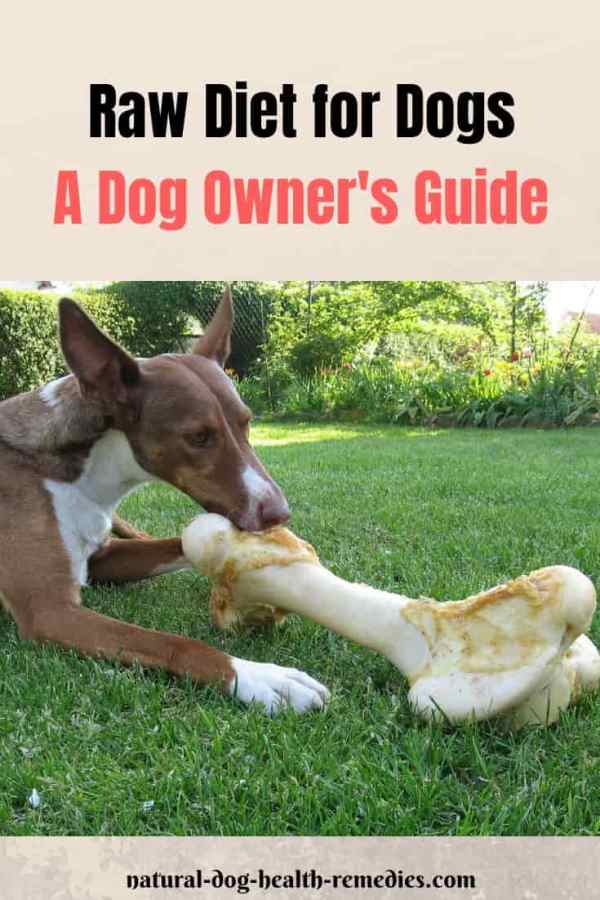
Large meaty raw bones that cannot be broken up easily can be fed to dogs occasionally as a snack. Dogs can clean their teeth naturally when chewing and gnawing on bones.
How About Bacteria in Raw Foods?
According to some holistic veterinarians (e.g. Dr. Pitcairn, author of Complete Guide to Natural Health for Dogs & Cats), dogs seldom get infected with bacteria such as E. Coli and salmonella after eating raw meat.
In fact, Dr. Pitcairn indicates that in the 15 years of working with dogs on raw diets, he has never seen one single case of E. Coli or salmonella in his dog patients.
Because dogs are by nature carnivores, they have a much shorter digestive tract and have much stronger stomach acids (hydrochloric acid) than people. These acids can break down harmful bacteria and fully digest animal meats, bones, and fat.
Also, dogs can keep food in their stomachs (in acidic condition) for up to 8 hours and pass just small amounts of digested food to the small intestine quickly. This ensures that bacteria are killed (in the stomach) and that they have little or no chance to multiply.
In contrast, foods are kept in a human's stomach for only about 30-60 minutes, but can stay in the small intestine for a long time. This creates a much higher chance for bacteria to multiple and cause problems.
Also, if you freeze meats for at least three weeks, most of the parasites will be killed. Therefore, one way to eliminate parasites in raw meats is to freeze the fresh meats for 3 weeks before feeding them to your dog.

When is it NOT Good to Raw Feed Your Dog?
While there are a lot of benefits of raw feeding your dog, there are occasions when raw feeding is not advisable. For example:
- Dogs that have recently been on courses of antibiotics should not be raw fed. The drug can kill off even the "good bacteria" in a dog's gut, making the dog more susceptible to pathogenic bacterial invasion. A one- to four-month waiting period on gently-cooked food is recommended.
- Dogs with compromised GI functions (e.g. dogs with leaky gut syndrome) or immune functions (e.g. dogs with cancer and are undergoing chemotherapy) are not suitable candidates for raw diets.
- Dogs with liver disease also should not be fed raw meat. While a healthy dog can handle harmful bacteria (e.g. E. coli) in the meat, dogs with liver disease are at higher risks of getting bacterial infection because their liver functions are not up to par to filter off the bacteria.
Supplementation
See this page for calcium and other supplementations.
When feeding a raw diet to dogs, the best way to maintain a healthy balance of minerals (especially calcium and phosphorus) is to feed 2 meals per day.
The first meal is a RMB meal while the second meal contains muscle and organ meats. You can also add other protein sources (e.g. eggs, dairy) and veggies to the second meal.
Remember, if you feed RMBs to your dog and the RMBs is about 50% of the diet, then your dog should get enough calcium and supplementation of calcium is not necessary.
Transitioning to a Raw Diet
 There are several ways to transition your dog from a kibble diet to a raw natural diet.
The first way is a gradual transition. Slowly switching over by first adding a bit of raw food to the kibble until your dog has totally got used to eating the new raw food.
By transitioning slowly, it will not only help your dog get used to the new taste, but will also allow the dog's digestive system sufficient time to adjust.
If there is not sufficient time for the system to adjust, diarrhea or appetite loss may occur since the bacterial flora in the dog's system cannot adjust abruptly to the new food.
Another way is to fast the dog for a few days. Fasting is a good way to cleanse the dog's system, decondition old taste habits, and stimulate the appetite.
You can do the following:
- For the first one or two days, feed a smaller quantity of the usual food plus a bit of meat, and veggies.
- For the next two to three days, switch to a liquid fast. Give only water, broths, and vegetable juices to your dog.
- After that, for the next day or two, add some solid foods (e.g. veggies, or eggs, or small amounts of meat) to the liquid diet.
- Finally, increase the amount of meat and veggies until they totally replace your dog's old food.
Some people also have reported success in switching over to a raw diet cold-turkey. No fast, no gradual transition. Just throw away the kibble and start the raw diet from day one.
No matter which way you use to switch over to a raw diet for dogs, it is advisable to do the following:
- Keep a diary of raw meals fed to your dog (at least at the beginning), so that you can see which foods your dog likes and dislikes, and which foods cause allergies or digestive problems such as diarrhea or gas.
- Before making the switch, ask a holistic vet to give your dog a physical check-up, and consult the vet about the best way to feed raw foods to your dog.
- To help ease the transition, consider using some herbs that can cleanse the body and rebuild tissue. Some safe herbs that are helpful in this regard are alfalfa and burdock. You can sprinkle about one to three teaspoons of dried alfalfa onto your dog's food every day, or if you can get fresh burdock roots, chop up some roots and add them to your dog's food.
Other Alternatives to Raw Foods
If you are uncomfortable feeding your dog raw meat, there are alternatives. For example, you may want to try to just sear the outside of the meat a bit, or cook the meat completely, or get some commercial raw freeze-dried dog food.
ReferencesR.H. Pitcairn, The Complete Guide to Natural Health for Dogs and Cats (Rodale, 2005).
L. Olson, Raw and Natural Nutrition for Dogs: The Definitive Guide to Homemade Meals (North Atlantic Books, 2010).
W.J. Dodds, D.R. Laverdue, Canine Nutrigenomics - The New Science of Feeding Your Dog for Optimum Health (Dogwise Publishing, 2015).