Natural Diets for Dogs
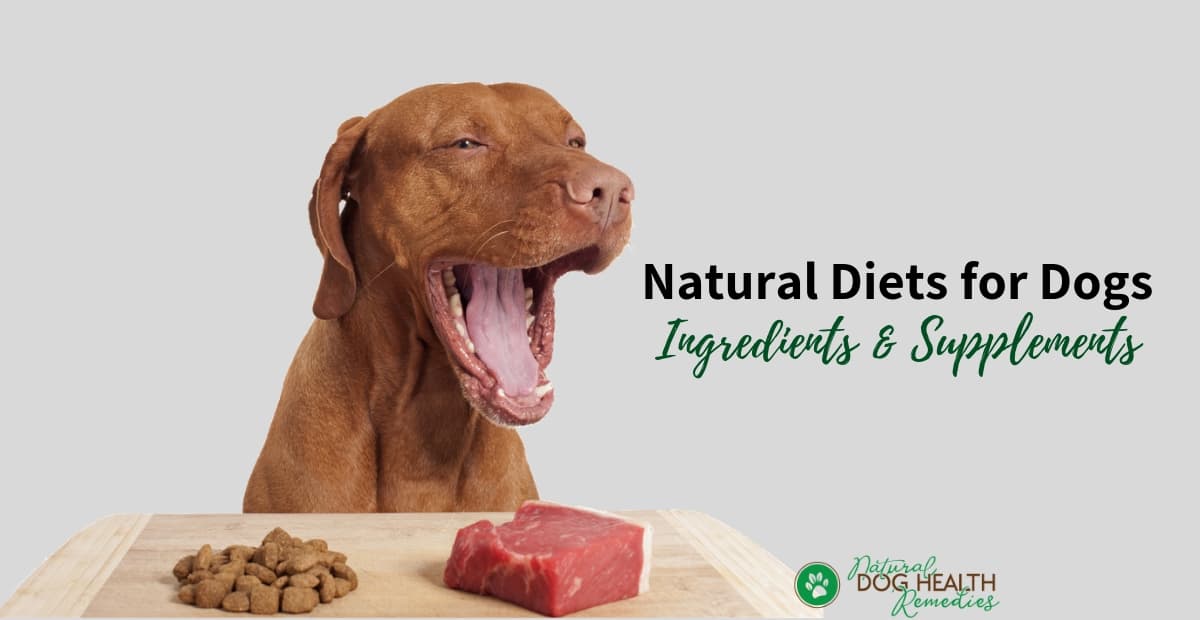
Holistic veterinarians are convinced that a balanced natural diet is one of the main keys to optimal dog health.
Natural diets give our dogs beautiful shiny coats, non-itchy problem-free skin, and keeps them healthy and happy. They can also improve digestive problems such as chronic diarrhea, gas, and constipation.
Dogs with allergies, kidney and liver problems also benefit greatly if their diets are switched to natural and organic.
If you are considering giving your dog natural home-made diets but are unsure exactly what to include in the diet, read on ...
Freshness and Variety in Natural Diets for Dogs
Freshness
You can feel "life" in food that is wholesome and fresh. Natural enzymes, probiotics, antioxidants, vitamins and minerals in their most natural state (therefore more digestible and easier to assimilate) can be found in fresh food.
Remember, the less heat-processed the food, the more likely it is that the nutrients will be preserved in their natural state by the time we feed it to our dogs. Cooking at high heat (and pressure) reduces the potency of nutrients, including L-carnitine, and completely destroys others such as thiamine, folic acid, vitamins A and C, niacin, and so on.
Did you know that there are 8,000 phytochemicals in whole foods? Human studies have proved that the complex mixture of these compounds work synergistically to bring about health-enhancing effects to the body.
More significantly, it is not a single component but rather the interaction of complex mixtures of natural chemicals found in whole foods that help prevent diseases in people.
Studies on the effects of whole foods on pets are rather rare, but here are two:
- One study found that the consumption of any type of veggies at least 3 times per week led to a 70-90% reduction in the risk of developing transitional cell carinoma in Scottish terriers.
- Another study found that older dogs fed a processed senior diet enriched with a mixture of fruits and vegetables plus additional vitamins E and C, L-caritine and DL-alpha-lipic acid had better cognitive functions that those fed just a processed senior diet without whole food and nutrient enrichment.
In view of this, many veterinarians now advocate feeding our dogs fresh raw foods over commercial dog kibble. If you look at the freshness scale below, you will understand why:
The Freshness Scale:
- Home prepared diet (preferably raw)
- Frozen raw food diets
- Freeze-dried and dehydrated foods
- Canned foods
- Dry kibble
However, it is understandable that not every dog parent has the time (and the inclination) to prepare home-made food for their dogs every day.
Don't feel bad if you cannot cook for your dog - it's OK! There are other choices.
For example, if you feed your dog dry kibble, you can still add fresher foods such as fresh or frozen raw food and bones, or fresh cooked meat, healthy table scraps, freeze-dried or dehydrated foods, and even canned food to enhance the quality of the overall diet.
Variety
Another important point to remember is "variety". Just as we eat a variety of foods every day, so should our pets.
A more diverse diet is far more likely to provide complete nutrition than a "formulated" diet fed over and over again. Not only will our pets get tired of the food, but also, more importantly, eating the same food repeatedly over long periods of time can contribute to the development of food sensitivities and allergies.
It is important therefore to add different varieties to your dog's foods regularly.
Main Ingredients In Natural Diets For Dogs
Let's take a look at what ingredients should be in a good natural diet for dogs.
Protein
Although these days, dogs are fed and trained to eat almost everything (from tofu to grains to junk food), they are by nature carnivores and their digestive systems are designed to handle a diet consisting mainly of protein and fat.
Protein is essential not only for good tissue and muscle health, but also for a strong immune system and healthy coat and skin.
However, not all proteins are the same. The main source protein for dogs should be animal proteins. Although grains and veggies also contain proteins, plant proteins do not contain all the essential animo acids that dogs require. Specifically, plant proteins are missing two essential animo acids (L-carnitine and taurine).
Sources of Protein
Meat is a rich source of protein and is also rich in many other nutrients beneficial to dogs. Many holistic veterinarians often recommend feeding our dogs these meats:
- beef
- chicken
- turkey
- pork
- lamb
When serving meat to your dog, larger chunks are better for chewing and tearing. The process can naturally clean their teeth. Obviously, if your dog has dental problems or is older, you may want to cut the meat up into smaller chunks.
Whenever possible, feed more than one kind of meat in a meal. For example, include muscle and organ meats, or use different cuts of meat. Also, if possible, use organically raised or chemical-free meats.
Besides meat, other sources of protein include:
- eggs
- cottage cheese
- yogurt
- fish
Fat
Unlike people, dogs need a lot of fats to stay healthy.
Fats are necessary for the absorption of fat-soluble vitamins. They are a rich source of essential fatty acids (Omega-6 and Omega-3). Fats give energy to dogs and protect them from the cold. In addition, fats make the food more palatable and help satiate the appetite.
The best fats for dogs are animal fats which can be found in fish oils, canned fish, meat, eggs, and whole milk yogurt.
If your dog is overweight, do not go for a "low-fat" diet. Overweight dogs still need all the fats to stay healthy. Just feed your dog less food.
Carbohydrates
Since dogs are not biologically designed to eat and digest foods high in carbohydrates (e.g. grains), carbs should be limited to a minimum, or none at all.
If you feed your dog a high-carb diet, the carbohydrates cannot be effectively digested and tend to stay in the dog's digestive tract for a longer period of time. This can lead to gas, bowel irritations, and your dog's stools will be bulky and smelly.
More seriously, it has been found that too much fiber can actually cause health problems to dogs.
Studies have linked carbs and grains to such health issues as allergies, arthritis, seizures, to name just a few. In addition, excessive starches in the dogs' guts can decrease the absorption of minerals, such as calcium, zinc, iron, and magnesium.
Some veterinarians may claim that carbs are a good source of energy for dogs. However, if you feed your dog a high level of protein (50% or over) and fat, the dog will have no problem with energy because, unlike people, dogs can convert fat to glucose in the liver for energy if given in high enough doses.
How about veggies? Do veggies form part of natural diets for dogs? You may ask.
Many dogs like vegetables, especially those that have a sweet taste. Vegetables are great sources of vitamins and minerals and small quantities (less than 25% of total daily food allowance) can be given to dogs. Too much vegetable matter can make the dog's body system over-alkaline, which can lead to problems.
Some vegetables can be fed to your dog fresh and uncooked, while others have to be cooked and preferably pureed to help your dog digest them properly.
The following vegetables do not have to be cooked. They are best served blended or pureed since that is the way they would be found in the wild diet (from the stomachs of dead animals):
- alfalfa sprouts
- beets
- bell peppers
- carrots
- celery
- fresh corn
- cucumber
- zucchini
* Occasionally, you can give your dog a whole unpeeled and uncooked carrot to chew on. It is good for the teeth and gums.
On the other hand, these vegetables should be cooked before being fed to your dog:
- broccoli
- cauliflower
- green beans
- peas
- potatoes
Another way to feed veggies to your dog is to make slightly fermented vegetable puree. It's easy!
You can use sliced carrots, cucumber, or other veggies suitable for dogs. Layer them with a small amount of unrefined sea salt, and press them under a weight. This creates lacto-fermentation.
Let the veggies stand until their juice separates out as a clear liquid that covers them. You can add small amounts of this clear liquid to your dog's drinking water, and puree the vegetables and add them to your dog's food.
Lactic acid from the fermentation enhances the nutrient content of the vegetables. The resulting bacteria can help improve digestion and absorption of foods, and maintain a good balance of gut flora.

Important Points to Remember
When preparing natural diets for dogs, bear in mind these points:
- Aim for variety as this helps to ensure the best balance of nutrients.
- Buy organic foods wherever possible.
- Unless you use organic vegetables and fruits, be sure to wash non-organic produce thoroughly as many of such vegetables and fruits may have been sprayed with insecticides at some point.
Supplements for Natural Diets for Dogs
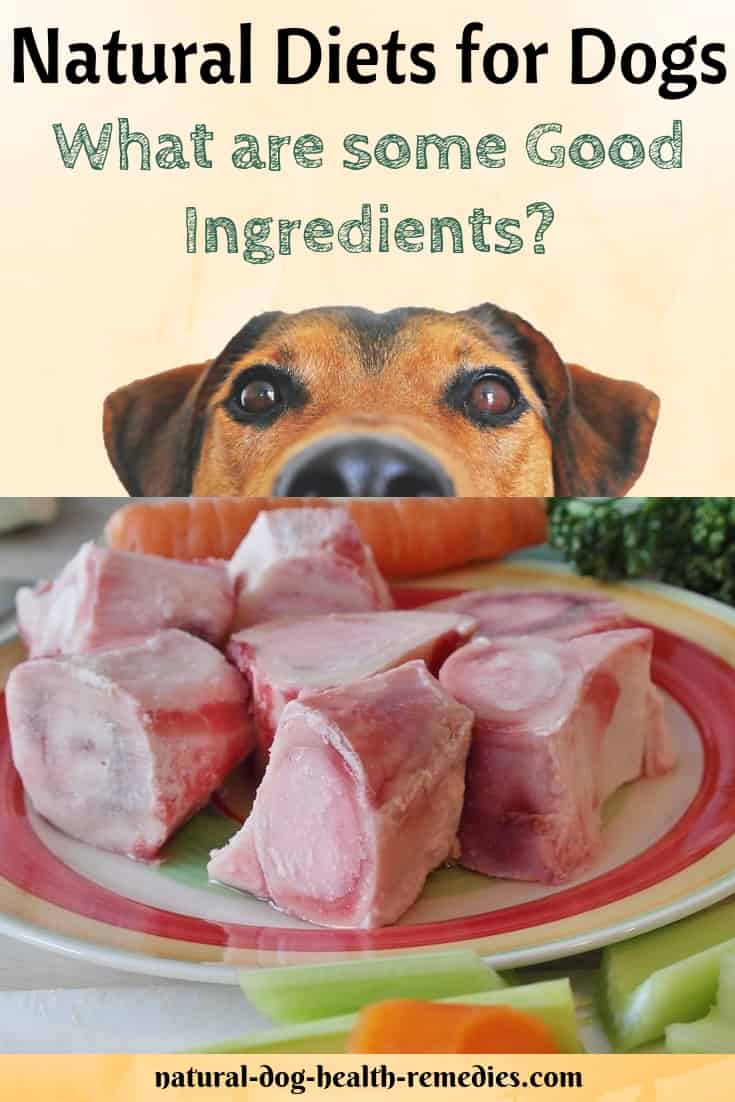 In addition to the above food ingredients, natural supplements should be added to your dog's diet.
In particular, calcium is probably the most essential mineral to consider. If your dog's diet does not contain any RMBs (raw meaty bones), you need to supplement with calcium.
You can give supplements of calcium carbonate or calcium citrate. Alternatively, add eggshells to your dog's food. Simply dry them overnight and grind them to powder using a coffee grinder.
As a rough guide, if the diet does not include RMBs, include approximately 900 mg of calcium carbonate per pound of food served. (Half a teaspoon of ground eggshell provides approximately 900 mg of calcium.)
Other supplements that should be added to your dog's diet include:
- Essential fatty acids
- Vitamins A, B complex, E
- Digestive enzymes

Read More...
- Considering feeding a raw diet to your dog? Read this page to learn more about the pros and cons of raw feeding, what kind of meat and bones can be given, and how to transition from cooked to raw food.
- Is a high fiber diet good for dogs with certain ailments such as chronic diarrhea or anal gland problems? Find out here.
- Wondering if dogs can be vegetarians? Read this page to find out.
- Can we feed human foods to our dogs? It depends - find out which human food items are good for dogs, and which are harmful here.
L. Olson, Raw and Natural Nutrition for Dogs: The Definitive Guide to Homemade Meals (North Atlantic Books, 2010).
W.J. Dodds, D.R. Laverdue, Canine Nutrigenomics - The New Science of Feeding Your Dog for Optimum Health (Dogwise Publishing, 2015).