Dog Paw Health and
Treating Paw Injuries
(FTC Disclosure: If you make a purchase via a link on this page, I may receive a small commission, at no added cost to you.)
Overview
Dogs usually have no protection on their paws, and yet they walk, run, and jump on concrete roads, rugged terrains, ice and snow, and rocky paths.
Their paws are constantly being exposed to a variety of potentially dangerous conditions. It is no wonder, therefore, that dog paw injuries are quite common.
The health of our dog's paws tends to be overlooked by many dog owners, but keeping our dog's paws healthy is in fact one of the most important things for our dog's wellbeing.
In this article, you will find information on:
- Causes of Paw Injuries
- Signs that Your Dog has an Injured Paw
- How To Keep Your Dog's Paws Healthy
- Seasonal Paw Pad Care
Possible Causes of Paw Injuries
As you can imagine, there are a lot of possible ways in which a dog can injure his paws. The most common causes include:
- Cuts on the dog's pads by sharp objects
- Cracks on the dog's pads due to hot, dry, or cold weather
- Insect bites or stings
- Broken toenails
- Dislocated toes
- Foreign objects (e.g. small rocks, burrs, etc.) lodged between the toes
Signs that Your Dog has an Injured Paw
Depending on the cause of the injury, most likely you will see some of the following signs:
- Limping
- Reluctance to use the injured foot
- Chewing or licking the affected paw
- Whining
- Swelling, reddness, pain, itching (in cases of insect bites or stings)
- Inflammation or infection can be caused by foreign objects lodged between toes
- Swollen and painful toe (in cases of broken or dislocated toe)
How To Keep Your Dog's Paws Healthy
There are quite a few things that you can do to keep your dog's paws healthy.
Moisturing Your Dog's Paw Pads
If your dog has dry and rough paw pads, or even worse, if he has super-dry and cracked pads, try using these home remedies:
- Coconut Oil: For dry rough paw pads, or cracked pads, put a bit of coconut oil on the pads and gently massage the oil into the pads. Coconut oil not only can moisturize the pads, but can also soothe itchy skin and prevent bacterial or fungal infections.
- Vitamin E: If your dog has cracked pads, try giving him Vitamin E supplements. Vitamin E improves blood circulation, enabling cracked pads to heal quickly. Vitamin E also strengthens the immune system, therefore is effective in preventing infections.
- Zinc and Selenium: These two minerals are indispensable for cracked pads (and maintaining healthy skin). Zinc strengthens the skin and quicken healing, while selenium boosts immunity. Consult your vet regarding optimal dosages for your dog.
This Cream is Good for Dry Cracked Paw Pads Too!
This LEGITPET Dog Paw Balm Wax Soother and Moisturizer Cream
Soothing, moisturizing, and nourishing for dry, cracked paw pads.
Caring for Cuts and Minor Irritations
For minor cuts and abrasions on the paw pads, use a disinfectant such as Betadine solution to disinfect the paw. Then put a bit of Calendula ointment on the cut and loosely wrap it with a bandage.
If your dog is always licking and chewing on his paws, it probably means that there are some kinds of contaminants (e.g. allergens, toxins, chemicals, etc.) that are irritating his paws.
Before your dog gets into the habit of licking and chewing his paws incessantly, try to use foot soaks to decontaminate his paws every time he returns home from the outside.
Here are just some examples of dog-safe and simple ingredients that you can use to make a foot soak:
- Green tea bags and water
- Apple cider vinegar and water
- Lemon juice and water
- Povidone iodine and water
Watch this video to see how simple it is to set up a foot soak to facilitate dog paw health:
If for some reason you cannot set up a foot soak for your dog, at least wipe down the dog's paws after walks or playing outside. A simple way is to soak a cloth in water mixed with apple cider vinegar and use the cloth to wipe down the four paws.
If you choose to use commercial wipes to clean our dog's paws, be sure to get one that contains only natural ingredients, and one that doesn't contain alcohol (e.g. proplylene glycol) and antibacterial agents (e.g. chlorhexidine digluconate). According to EWG (Environmental Working Group), these ingredients are skin irritating and may be toxic to human skin.
Trimming Dog Nails
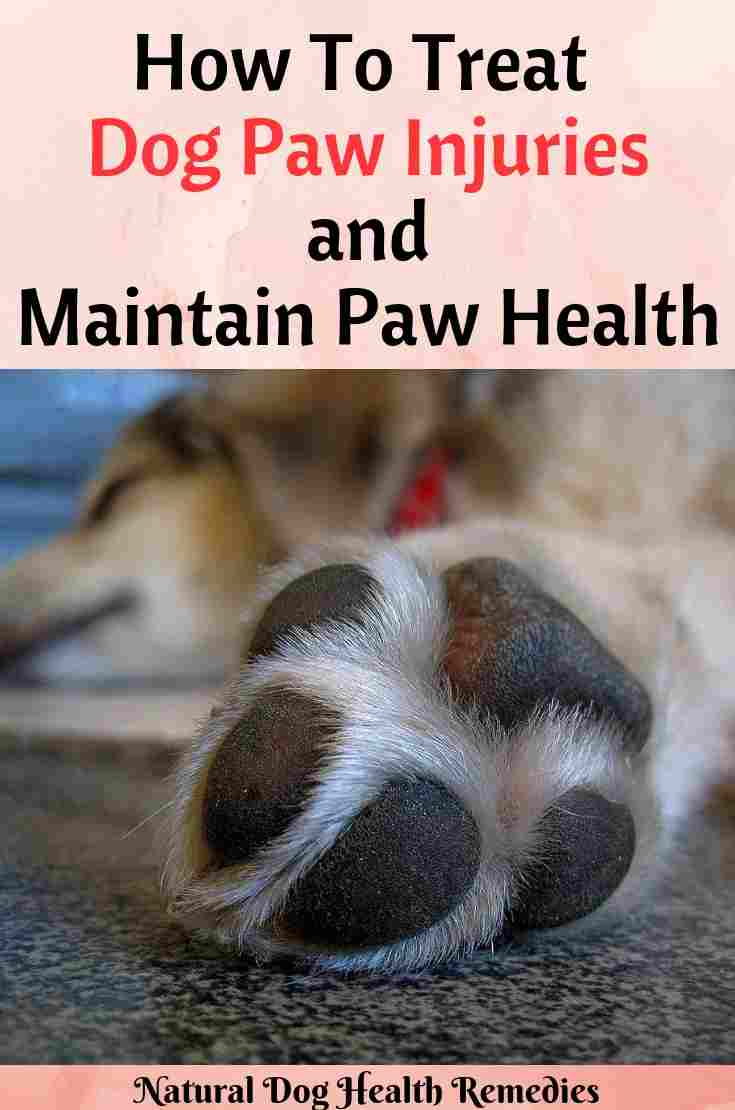 Keeping your dog's nails trimmed is also an important part of keeping his paws healthy.
Dog nails that are allowed to grow too long can raise health issues. One result of extended nail growth is ingrown nails which can be very painful for our dogs. Extended nails can also break easily.
In addition, long nails also make it difficult for dogs to place their full body weight on their feet. As a result, dogs with long nails may develop sore feet, legs and hips. It is therefore important to trim our dog's nails regularly.
Many dogs do not like having their nails cut or trimmed, especially if we use one of those guillotine style nail clippers. It is easy to cut too close to the "quick" resulting in bleeding. It's really painful for the dogs and no wonder they almost always put up a fight when they see the clippers!
A much better way to trim our dog's nails is to use a product like Oster Pet Nail Grinder (which is essentially an electrical "whirling emery board"). I have been using it to trim my dog's nails for a while now and it's a breeze! No more bleeding, and no more stress (for both my dog and me!).
Tip #1: If you use a nail clipper and accidentally cut the "quick", and you don't have access to some styptik powder, you can simply apply some cornstarch or cayenne pepper to the nail to stop the bleeding.
Tip #2: Rub a little Vaseline into the nails after trimming and polish them with a soft cloth to make them look shiny and clean!

Caring for Your Dog's Paws in the Winter
Our dog's foot pads can be dry and rough in the winter time, especially if you live in a place where it is cold and snowy.
Rock salt and most chemical de-icers can irritate a dog's paws. Salt and de-icers caught between the dog's toes can make walking uncomfortable. Most de-icing products or rock salt are also toxic to dogs if ingested.
It is important therefore that we pay extra attention to the dog paw health in the winter time. In particular:
- As much as possible, stay away from heavily salted areas when walking your dog.
- Check your dog's paws after walking. Specifically, look between toes and examine the foot pads for cracks in the skin.
- To avoid ingestion of salt or de-icers by your dog, always wash his paws with warm water or use one of the foot soaks introduced in the video above after winter walks and activities.
- Apply some coconut oil to your dog's foot pads after washing to prevent drying up or cracking.
- Use a safe de-icer outside your house, such as Safe Paw Non-Toxic Ice Melter
. This de-icer is non-corrosive and is safe for pets and children as well.
- If you are going on a winter hike, protect your dog's paws from the snow. Get some dog booties for him to wear.
 . This de-icer is non-corrosive and is safe for pets and children as well.
Caring for Your Dog's Paws in the Summer
If you live in a place where the summer is HOT, extra care has to be taken to protect your dog's paw pads.
- Avoid walking in noon or early afternoon when the sun is the hottest.
- Do not let your dog walk on the hot asphalt.
- Get your dog to wear doggie boots if necessary.
- For minor burns on the paw pads, put some aloe vera gel on the burned pads and loosely wrap the paws with a bandage.
C.J. Puotinen, Natural Remedies for Dogs and Cats (Keats Publishing, 1999).
R.H. Pitcairn, The Complete Guide to Natural Health for Dogs and Cats (Rodale, 2005).