Vegetarian Diet for Dogs
Overview
Vegetarian dog food? Can dogs live without meat? Aren't they carnivores? Are you one of those dog parents who wonder if dogs can be vegetarians?
Most people know that cats are true obligate carnivores, which means that they have to eat meat to survive.
However, these days, some people and even veterinarians believe that dogs are somewhat different because dogs seem to eat almost everything, including vegetables and grains.
True, dogs can survive on a variety of food sources, but the question is, do you just want your dog to survive, or do you want your dog to be in optimal health and thrive?
If you want your dog to thrive (which I am sure you do), then turning your dog into a vegetarian or even vegan is not a wise thing to do!
The Dangers of a Vegetarian Diet for Dogs
In Europe, a study has been done to study the health conditions of a sample group of "vegetarian dogs". The findings were alarming, for example:
- Half of the dogs studied showed protein deficiency.
- In about 62% of the dogs, calcium levels were low.
- Phosphorus levels were low in about half of the dogs studied.
- Over 50% of the dogs suffered from vitamin B12 deficiency.
- Over 70% of the dogs did not have enough sodium intake.
A more alarming result from the study was that even the commercial vegetarian diets were not nutritionally adequate to keep a dog healthy!
Why is a Vegetarian Diet Dangerous for Dogs?
To understand why a vegetarian diet for dogs is not appropriate, let's look at the main foods and nutrients required by dogs to make them thrive, and see how they are obtained from diets:
Protein
Dogs need protein (animo acids) to grow, for metabolism and energy, and generally to stay healthy. Specifically, dogs need 22 amino acids altogether but their bodies can only produce 12. The remaining 10 amino acids have to come from their diets.
Advocates of vegetarian diets may say that plants also provide amino acids and human vegetarians can get most of the amino acids they need by eating a combination of veggies and grains.
That is true for humans but dogs are different.
Dogs require some amino acids that are only readily available in animal proteins, such as taurine and l-carnitine. A deficiency of these two amino acids in dogs can lead to heart problems, such as dilated cardiomyopathy.
Some people also suggest feeding soy (such as tofu) in place of meat. While soy protein works for people, it is definitely not suitable for dogs. Soy is a known allergen for dogs (same as corn), and soy can cause a number of health issues in dogs, including gas and bloat, seizures, and endocrine problems.
Additionally, a vegetarian diet is by nature carbohydrate-based since that is the main source of protein for the dog. However, biologically dogs are designed to eat and digest meat and bones, not carb-based food sources.
Dogs do not have the salivary enzymes to break down carbohydrates. This puts extra burden on the pancreas to produce sufficient enzymes to process the plant matters.
In the long run, this may affect the proper functioning of the pancreas. Also, dogs have much shorter digestive tracts and the ingested foods are meant to move through it quickly. However, carbs need a lot more time to be digested. This results in gastric upsets, gas, bloat, and the stools are often bulky and smelly.
Fat
Unlike people, dogs are not prone to high cholesterol and heart attacks because of high fat diets. Dogs need fat for energy, to absorb fat-soluble vitamins and to obtain essential fatty acids.
While fatty acids can be obtained from plant sources (e.g. flaxseed oil), the FAs from plant sources are in the form of alpha-linolenic acid (ALA) which has to be converted to EPA and DHA to be of nutritional benefit.
However, dogs do not have the required enzymes to do the conversion.
Fatty acids from animal sources (e.g. fish oil like salmon oil) are rich in Omega-3 and Omega-6 and have enormous benefits for dogs, including maintaining a healthy skin and coat, preventing inflammation, promoting healing, and so on.
Minerals
While plants are high in certain minerals (such as phosphorus, potassium, and magnesium), they are low in others (e.g. sodium, calcium, zinc). If vegetarian diets for dogs are fed, dogs have to be supplemented with minerals to maintain a healthy balance.
However, it is very difficult to get a right balance by supplementation - giving too much or in the wrong combinations can be just as dangerous!
Vitamins
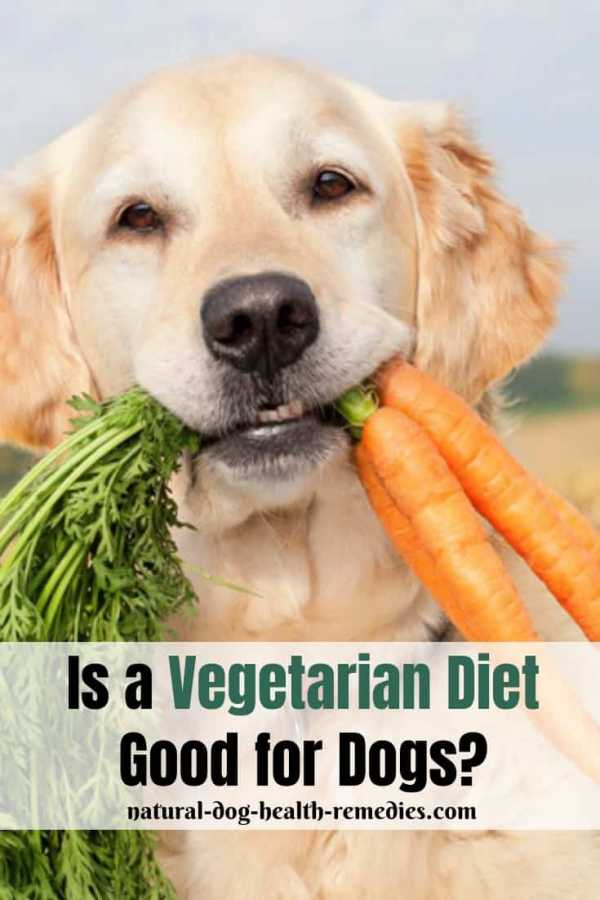 Dogs also need vitamins to thrive. However, a vegetarian diet cannot provide all the vitamins they need.
For example, while plants contain vitamin A, it is in the form of beta-carotene which has to go through a process of digestive conversion before it can be utilized by dogs.
However, dogs are not equipped to do the conversion. B vitamins are also more readily found in animal proteins (e.g. organ meats and dairy products are the best sources of vitamin B2).
Say Goodbye to a Vegetarian Diet for Dogs
Hopefully by now you will realize that a vegetarian diet is not species-appropriate for your canine friends.
Recently, there are some commercial dog foods that claim to be vegetarian or even vegan that are nutritionally balanced.
No matter what they claim, the truth is such kind of diets are against what nature intended. It is unnatural to feed foods to dogs for which they are not designed to eat and digest.
Dilated Cardiomyopathy and A Diet High in Legumes/Potatoes
While we are on the topic of vegetarian diet for dogs, I would like to draw your attention to this FDA alert.
In July, 2018, the U.S. Food and Drug Administration (FDA) sent out an alert to dog owners and veterinary professionals about a possible connection between numerous cases of canine dilated cardiomyopathy (DCM) and a diet containing peas, lentils, other legume seeds, or potatoes as its main ingredients.
Dilated cardiomyopathy is a common cause of congestive heart failure in dogs. The disease is believed to be largely hereditary. Dogs prone to this disease are mostly large breed dogs, such as Boxers, St. Bernards, Great Danes, and Doberman Pinschers.
What makes these cases unusual is that, the dogs that have developed DCM in these cases are breeds that are not typically genetically prone to the disease. The dogs in question include Golden and Labrador Retrievers, Whippets, a Shih Tzu, a Bulldog and Miniature Schnauzers, as well as mixed breeds.
There is, however, one common factor among these dogs: Their diet.
These dogs' diet consistently contained potatoes or multiple legumes (such as peas, lentils, seeds), starch and fiber as their main ingredients (rather common in commercial "grain-free" as well as "vegan" dog food).
FDA is still working with veterinarians to try to determine if there is a definite causal link between a diet high in potatoes and legumes and DCM.
To be safe, if your dog is on a diet high in potatoes and/or multiple legumes, talk to your vet to see if a change of diet is advisable.
If your dog is on such a diet AND is showing signs of DCM (e.g. low energy and lethargy, unproductive cough, breathing difficulty, panting, episodes of collapse), you should definitely take your dog to the vet and let him know about the possible diet connection.
You may also want to report your dog's case to FDA.
L. Olson, Raw and Natural Nutrition for Dogs: The Definitive Guide to Homemade Meals (North Atlantic Books, 2010).
W.J. Dodds, D.R. Laverdue, Canine Nutrigenomics - The New Science of Feeding Your Dog for Optimum Health (Dogwise Publishing, 2015).
M. Segal, K9 Kitchen: The Truth Behind the Hype (Transcontinental Printing, 2009).