
Stomach Ulcers in Dogs
(FTC Disclosure: If you make a purchase via a link on this page, I may receive a small commission, at no added cost to you.)
Overview
Do dogs get stomach ulcers? Many dog parents wonder.
Well, dogs don't get stomach ulcers from the falling stock market or work-related stress, but that doesn't mean that dogs do not suffer from ulcers! They do!
This article looks at:
- What causes ulcers in dogs?
- What are the signs and symptoms of ulcers in dogs?
- How are dog stomach ulcers diagnosed and treated?
- Natural home remedies for treating dog stomach ulcers
- A bland diet for dogs with stomach ulcers
- Prevention of dog stomach ulcers
What Causes of Stomach Ulcers in Dogs?
The most common causes of ulcers in dogs include:
Medications
Conventional anti-inflammatory medications prescribed for skin conditions, arthritis, or other chronic health problems, such as NSAIDs, corticosteroid, can cause canine ulcers.
In addition, conventional medicines for pain relief, such as aspirin and ibuprofen, inhibit a hormonelike substance that acts as a protection for the stomach lining.
Prolonged use of these medications, therefore, can also cause stomach ulcers in dogs. Sometimes the condition can be serious. (Although buffered aspirin is said to be gentler and easier on the stomach, it can still lead to dog ulcers.)
Mast Cell Cancer
Another cause of dog stomach ulcers is mast cell cancer in the skin. Cancerous mast cells release histamine which leads to stomach ulcers.
Other Causes
Other less common causes include:
- Lead poisoning
- Stress
- Injuries
Symptoms of Stomach Ulcers in Dogs
Dogs with stomach ulcers usually show the following symptoms:
- Vomiting (even with an empty stomach)
- Blood in vomit
- Black, tar-like stool
- Loss of appetite
- Anemia
- Weakness and lethargy
Diagnosis and Treatment
Physical examination and tests may include:
- Blood tests
- Urine tests
- Feces analysis
- Ultrasonography
- Endoscopic examination
Conventional treatment include diet change and antacid medications to coat the stomach lining.
Depending on the conditions of the dog, medicines for diarrhea and vomiting may also be described.
Natural Remedies for Dog Stomach Ulcers
To effectively deal with canine ulcers, herbs and other supplements can be used to:
- treat the ulcers and accompanying symptoms in a more gentle way;
- improve and strengthen the immune system of the dog.
Herbs
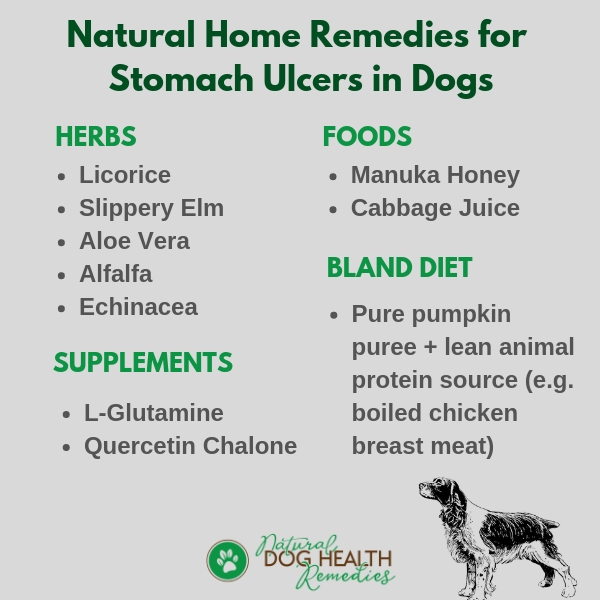
Herbs that can soothe, coat, and help rebuild the stomach lining are effective in treating ulcers:
- Licorice root: This herb stimulates cell growth, helps protect the stomach's walls, and alleviates ulcers. (Dosage: 100 to 300 mg depending on the size of the dog, up to one week.)
- Slippery elm: This herb soothes, lubricates and protects the stomach walls and digestive tract, and is ideal for treating ulcers.
(Dosage: 1/2 teaspoon to 1 tablespoon depending on the size of the dog, 3 times a day. Use the powdered form of the herb and mix it with warm water until it forms a paste.)
- Aloe vera: The juice of this herb prevents nausea and help ulcers heal faster. (Dosage: one to two teaspoons of the juice once a day can be added to the dog's drinking water.)
- Alfalfa: This herb is anti-inflammatory, and supports the rebuilding of mucous membranes. Alfalfa is known to balance hyperacidity in the digestive tract and has been traditionally used for digestive ailments.
- Astragalus/Echinacea: These herbs are immune-booster and can strengthen the overall health of a dog.
Supplements
- L-glutamine: This is an amino acid that is effective for protecting and healing mucous membranes, such as the lining of the stomach. It also prevents the formation of stomach ulcers.
- Quercetin Chalcone: Quercetin is a bioflavonoid and it has antihistamine, anti-inflammatory and antioxidant properties. Quercetin Chalcone, a form of Quercetin, can inhibit bacterial growth in the stomach and may be helpful in preventing stomach ulcers.
Home Remedies for Ulcers in Dogs
For ulcers that are not deep (superficial), try these home remedies:
- Manuka Honey: Manuka honey from New Zealand is the "king" of honey. It is rich in antioxidants and flavonoids, and is known to be highly anti-bacterial, anti-viral and anti-fungal. It can kill Helicobacter pylori bacteria, which causes stomach ulcers. It also has inflammatory-properties.
In a study, it was found that Manuka honey had anti-ulcer properties and worked well against ulcers in rats.
Try giving a teaspoon to a tablespoon (depending on the size of your dog) to your dog every day. Be sure to get Manuka with a UMF of at least 10+.
- Cabbage Juice: Research has shown that cabbage juice facilitates rapid healing of stomach ulcers in people.
It's no wonder if you look at what's in the cabbage juice. It's rich in the amino acid L-glutamine and the compound gefarnate, both of which are effective in nourishing the lining of the GI tract.
Cabbage is also rich in S-methylmethionine, which has anti-ulcer properties.
You can of course make the cabbage juice yourself, or if you don't have time, use cabbage extract. It is easy to use: just add 1/4 teaspoon of the powder to a glass of water and give it to your dog with meals.

Also Try These Remedies:

This formula contains the herbs ginger and alfalfa, as well as supplements such as L-glutamine, probiotics, and enzymes. It is excellent for dogs (and cats) suffering from chronic or recurrent GI problems, such as poor digestion, stomach ulcers, food allergies, or IBDs.
This formula includes immune-boosting herbs such as echinacea, goldenseal, elderberry, and more. These immune-boosting herbs work synergistically to help strengthen the immune system of a dog.
What is a Good Dog Stomach Ulcer Diet?
Usually, a dog with stomach ulcers is put on a bland diet.
One example of a bland diet is pure unsweetened pumpkin puree with lean animal proteins, such as boiled chopped-up skinless boneless chicken breast or turkey breast.
Mix one part of pumpkin puree with one part of animal protein source (50:50 ratio). Feed the dog 3 to 6 times per day in small amounts.
Pumpkin is rich in pectin, which protects the stomach and helps soothe stomach ulcers.
Preventing and Controlling Ulcers in Dogs
 As always, prevention is better than cure. If your dog has a weak digestive system, and is showing signs of ulcers, such as vomiting and diarrhea, take action quickly. Use the remedies recommended in this article to nip the problem in the bud.
Also, try doing the following:
Feed the Dog More Frequently
Just like people with ulcers, dogs with ulcers also benefit from having more frequent meals in smaller portions. If your dog is fed only once or twice a day, stomach acids have more chance to irritate the dog's stomach. Divide the food into smaller portions and feed your dog three or four times a day instead.
Reduce Stress
Stress in itself may not cause ulcers in dogs, but if a dog with ulcers is under a lot of stress, his condition may get worse. It is therefore advisable to provide a calm, loving, and stress-free environment for your dog.
Stop all Ulcer-Causing Medications
As mentioned above, the most common cause of ulcers in dogs is conventional anti-inflammatory medications and pain-killers.
If at all possible, stop using ulcer-causing medications and try natural remedies first.
For example, if your dog is suffering from arthritis or allergies, and is in need of long-term medication for allergies or pain relief, try using some gentle natural pain relief or natural remedies for allergies.
ReferencesEldredge, et al. Dog Owner's Home Veterinary Handbook 4th edition (Wiley Publishing, 2007).
C.J. Puotinen, Natural Remedies for Dogs and Cats (Keats Publishing, 1999).
M.L. Wulff-Tilford and G.L. Tilford, Herbs for Pets (Bowtie Press, 1999).
M. Goldstein, The Nature of Animal Healing (Ballantine Books, 2000).
R.H. Pitcairn, The Complete Guide to Natural Health for Dogs and Cats (Rodale, 2005).