Parvo in Puppies
What Exactly is Parvo?
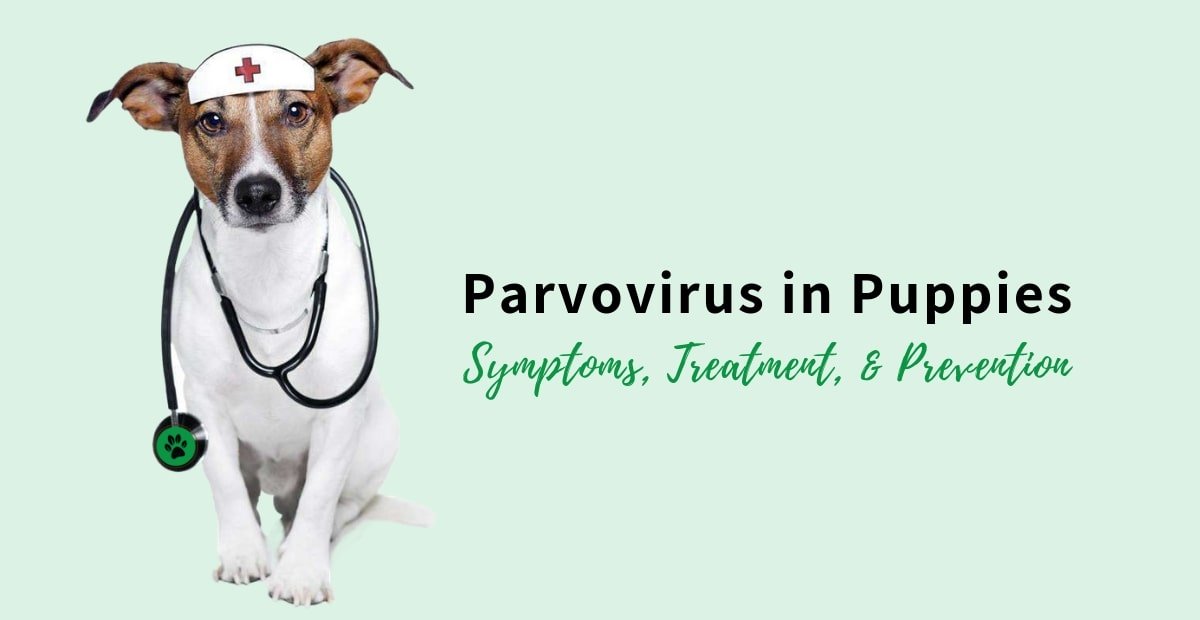
Canine parvovirus (CPV), is a viral disease that is highly contagious and can spread quickly to dogs that are not immune from the disease.
Parvovirus can affect dogs, wolves and foxes. It cannot infect other animals and is not contagious to humans. However, other animals and humans can pass the virus onto dogs.
Parvovirus affects mainly puppies and younger dogs. (However, older dogs can catch the parvo virus as well.)
Puppies between weaning and up to six months of age are the most at risk. Once a puppy is infected, the survival rate is only 50%, even with medical treatment.
The critical period is the first five days of infection. If timely treatment and care is given to an infected puppy, and if the puppy can get past the first five days, he will probably live and become immune to the virus.
If the puppy is left untreated, dog parvo can kill him in 2 to 3 days.
Recovery from the disease depends on the virulence of the strain, the amount of virus ingested, and the breed.
Some breeds (e.g. Doberman Pinschers, German Shepherds, Pit Bulls, Labrador Retrievers and Rottweilers) are particularly susceptible to parvo. Even worse, once infected, these breeds seem to succumb to the virus faster than other breeds and they seem to have a lower chance of recovery.
How Do Dogs Get Parvo?
Canine parvovirus is spread by infected dogs. Some adult dogs infected with the virus do not get sick - they are just carriers.
Infected dogs shed the virus (mainly in their stools and vomit) in massive amounts during the two weeks following exposure, contaminating yards, playgrounds, and other places where dogs frequent.
In addition, canine parvo can be transmitted by people (on their clothing or shoes), or by birds (on their feet) if they ever step on some contaminated soil.
Inside the house, the virus can survive on objects such as clothing and carpets for a long time (over 5 months). Household pests such as cockroaches can also carry the virus from place to place.
Unlike the distemper virus, the parvo virus is not enveloped in fat, which means it is especially hardy in the environment and extremely difficult to eliminate. The virus is also shed in large amount by infected dogs.
As you can imagine, a dog can get the parvo virus virtually anywhere!
So why do some dogs with the parvo virus get sick while others don't?
Infection depends on several factors, namely:
- the dog's age, health condition, and breed;
- whether the dog has been vaccinated against the virus, or whether he has previously been infected.
- whether the dog has been exposed to a large number of virus.
Two Forms of Canine Parvovirus
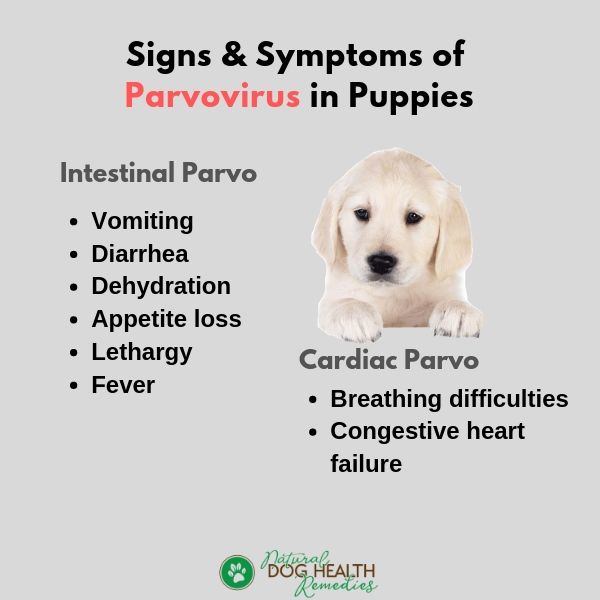
The two forms of canine parvovirus are intestinal and cardiac.
Intestinal ParvoIntestinal parvo (known as enteritisis) is more common than cardiac. A dog can get the parvo virus by direct contact through the mouth. For example, by licking soil or pavement contaminated with the virus.
Once the virus has entered the dog, it starts replicating in the dog's throat tissues, and then moves to the bloodstream. It then attacks and destroys the dog's intestinal lining, as well as the lymph nodes and bone marrow.
The intestinal lining takes about 5 days to grow back. Therefore, during those 5 days, the dog is left without any method of digesting, and is left with a very weakened intestinal wall so bacteria can get across it.
Bleeding into the intestine will also occur and the wall will be very inflamed.
Cardiac ParvoThis is less common and affects mostly young puppies, infected either in vitro (from their mother who is not vaccinated against parvo), or within the first 2 months after birth.
Cardiac parvo causes myocarditis (inflammation of the heart and damage of the heart muscle).
The cardiac parvo symptoms are sparse and can come on rather rapidly. Usually, a puppy with cardia parvo will have breathing difficulties, followed by congestive heart failure, and sudden death.
Those puppies that manage to survive cardiac parvo often end up with some form of heart problems and die young.
Symptoms of Parvo in Puppies
Parvo symptoms in puppies and dogs come in different degree of severity, depending on various factors, such as the age and the overall health of the dog.
Young puppies (12 weeks or younger) are the most vulnerable. In fact, the majority of cases of disease are seen in dogs less than 6 months of age.
The symptoms described below are those of the more common dog parvovirus - the intestinal parvo. These symptoms may not appear in the order as listed below. Every dog is slightly different.
Usually, the onset of these clinical symptoms is rather sudden, often 12 hours or less.
VomitingAs the parvovirus attacks intestinal cells, GI tract problems are common parvo symptoms.
One such problem is vomiting - usually uncontrollably. The dog will continue to heave and throw up yellow bile even after the stomach has been emptied.
DiarrheaAnother typical symptom of parvo is diarrhea.
The stools have a very distinct, foul odor. At the beginning, the stool is yellowish or greenish looking. It will then turn into a dark-brown runny stool, which actually is old blood from the small intestine.
DehydrationAs the puppy continues to vomit and have diarrhea, he can become seriously dehydrated very quickly, losing a lot of vital electrolytes, such as potassium.
Potassium is responsible for nerve conduction. It regulates the heart beat and muscle contraction.
As you can see, low potassium levels can lead to extreme shock to the dog's system. Some dogs die from cardiac arrest simply because the potassium level is too low.
Thus, dehydration is often fatal and in fact is the main cause of death for dogs with parvo. A dog with parvo may die from dehydration in about 48-72 hours after showing symptoms of vomiting and diarrhea.
Therefore, it is extremely important to get your pup early treatment at a vet if he shows parvo symptoms to prevent dehydration.
Click here to see how to check for dehydration in dogs.
LethargyA puppy with parvo may appear lethargic. He is reluctant to play and seems to be sleeping or lying around a lot more.
There are several reasons why a puppy with parvo is lethargic. The main reasons are:
- Weakened body organs, such as the heart, liver, and kidneys
- Low blood sugar
- Dehydration
As the intestinal lining is destroyed by the parvovirus, a puppy with parvo will lose his appetite and show no interest in food.
Other Possible Parvo SymptomsIn severe cases of dog parvo, the dog may develop a fever (sometimes as high as 106°F). Also, the white blood cell counts will become lower.
A dog with parvo may also appear depressed and lose interest in even his favorite activities and games.
Vomiting but No Stools
Sometimes a dog with parvo vomits but has no stools. This may be due to one of the following reasons:
- The dog may have both Parvo and worms.
- The dog is severely dehydrated. Test for dehydration and try to rehydrate the dog.
- The dog's intestinal tract lining is swollen, which can be due to various reasons. This condition can become serious: if the puppy is straining to pass a stool, this can be hard on the heart, which can be weakened by the presence of the parvo virus.
If your dog does not produce any stools in 24 hours, you should take him to your veterinarian to check for blockage, as a blockage is life threatening.
Conventional Dog Parvo Treatment
 Unfortunately, there is no "cure" for canine parvovirus.
Parvo treatment is limited to supportive therapy - controlling the symptoms and keeping the dog patient warm and as comfortable as possible. Very often, hospitalization is required.
The most important treatment is to prevent dehydration caused by vomiting and diarrhea.
Therefore, the first step taken by vets is to replace fluid and electrolyte loss. These can be given to the dog either orally, subcutaneously (under the skin), or intraveneously, depending on how seriously the dog is dehydrated.
Also, blood transfusions may be necessary.
If the dog is vomiting uncontrollably, drugs will be given to slow the vomiting.
Antibiotics will be used to prevent secondary bacterial infections, and corticosteroids or NSAIDs (non-steroidal anti-inflammatory drugs) will be used to control intestinal inflammation.
The most important thing is to provide lots of support to the dog patient during the initial 3-5 days during which the dog's body repairs the intestinal lining. However, even with intensive medical treatment and support (which can be expensive), a lot of dogs succumb to the virus and die.
As conventional parvo treatment (especially treatment that involves hospitalization) can be very expensive, sometimes some dog owners simply cannot afford such treatment.
In such cases, home treatment should be mainly directed at keeping the dog hydrated. Pedialyte, which is the fluid of choice for dehydration, should be given to the dog (Gatorade should NOT be given since it contains too much sugar and salt. It will just suck out any fluids that are left in the dog).
Prescription drugs can be given to the dog to control vomiting.
Natural Dog Parvo Treatment
Natural remedies can be used in conjunction with conventional medication to help relieve acute symptoms such as vomiting and diarrhea.
When the dog is recovering from the disease, natural supplements and remedies can also be used to strengthen the weakened digestive and immune systems.
Please remember that none of these remedies and supplements will cure parvo, but they can enhance conventional parvo treatment and help your dog recover faster.
There are also homeopathic nosodes that may control parvo outbreaks, but nosodes should be used carefully and always under the supervision of a professional vet. Therefore, be sure to consult a holistic vet if you would like to use nosodes for dog parvo.
Homeopathic Remedies for Acute Parvo Symptoms
Homeopathic remedies are effective in relieving GI symptoms such as vomiting and diarrhea. Usually they act rather quickly.
For acute vomiting and diarrhea, use Arsenicum Album
This remedy can be life-saving and should be in your dog first aid kit. Give your dog one dose every hour for up to 6 doses, and then 4 doses daily until the vomiting and diarrhea subside.
If the vomit contains blood, use Phosphorus
If there is blood in the stools, use Mercurius Corrosivus
Vitamins and Herbs for the Immune System
Vitamins and immune-boosting herbs are effective in strengthening the immune system which has been greatly weakened by the virus.
- Vitamin C: Vitamin C is effective for immune-building. Give 5-10 mg/lb, 2-3 times daily to your dog.
- Vitamin E: Vitamin E can also be given (5-10 mg/lb, once a day) to your dog to boost his immune system.
- Echinacea: This herb is very effective in boosting the immune system, and it also supports the lymphatic system. Other immune boosting herbs include Siberian ginseng, Ashwagandha, and Oregon grape.
A Good Natural Immune Booster
Immune SURE for Canine Immune System Support
This all natural herbal formula contains immune boosting herbs such as Echinacea, Elderflower, Goldenseal, Lemon Balm, Licorice, and more and can greatly help a dog weakened by parvovirus.
Natural Supplements to Strengthen the Digestive System
Probiotics should be given to your dog to restore normal intestinal bacteria, especially if antibiotics have been administered.
Digestive enzymes can help the mending digestive system to better digest and absorb nutrients from foods, so that the dog weakened by parvovirus can get the most out of the foods he eats for a quicker recovery.
Parvo Treatment Summary
In the unfortunate event that your dog has become infected with parvo, here is what you should do:
- Take her to the vet for treatment.
- Additionally, use homeopathic remedies to alleviate some of the acute symptoms caused by parvo.
- Feed her a bland diet.
- Keep her isolated for at least a month after she recovers.
- Use natural supplements and herbs to build up her immunity and digestive system.
Prevention of Parvovirus
To prevent the spread of parvo, remember to:
- Vaccinate your puppy against parvovirus.
- Pick up any dog poop on your property or during walks.
- Use chlorine bleach mixed with water to wash and disinfect dog bowls, bedding, the floors, crates, etc.
Eldredge, et al. Dog Owner's Home Veterinary Handbook 4th edition (Wiley Publishing, 2007).
C.J. Puotinen, Natural Remedies for Dogs and Cats (Keats Publishing, 1999).
M.L. Wulff-Tilford and G.L. Tilford, Herbs for Pets (Bowtie Press, 1999).
R.H. Pitcairn, The Complete Guide to Natural Health for Dogs and Cats (Rodale, 2005).
D. Hamilton, Homeopathic Care for Cats and Dogs (North Atlantic Books, 1999).