Hyperactive Dogs - Symptoms & Causes
Overview
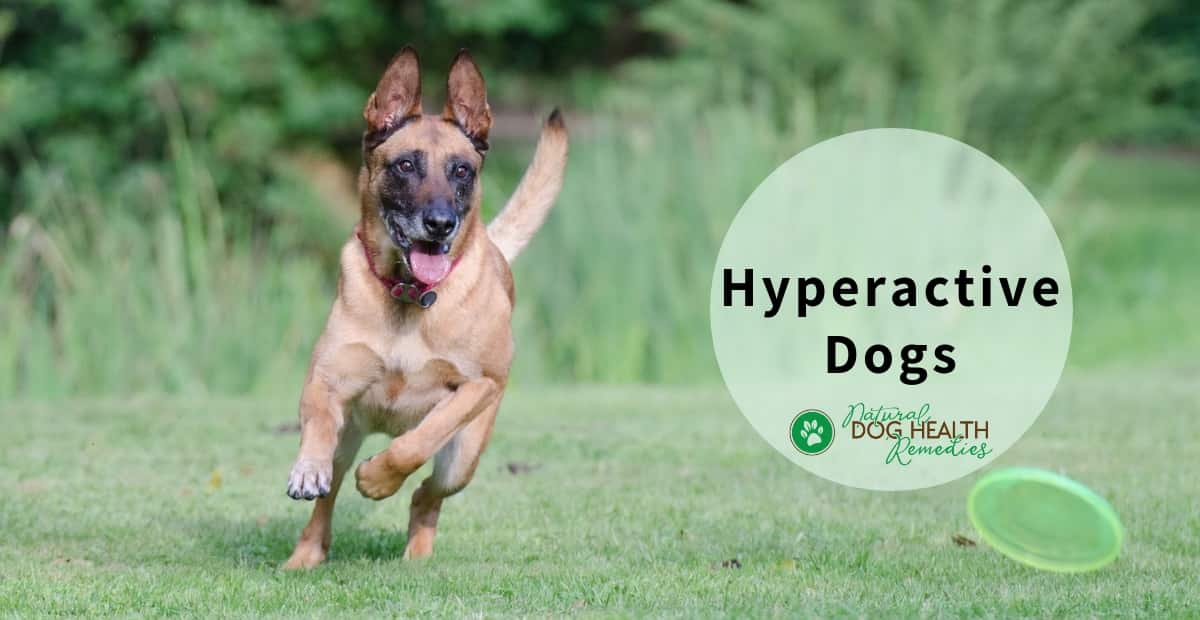
Having problem dealing with your overly hyperactive dogs? You are not alone!
Statistics show that there are more and more hyperactive dogs these days. The exact causes are not known, but some veterinarians suspect that food and the environment are two big contributing factors.
Dog hyperactivity or aggression can be a huge headache for owners - sometimes to the point where they can no longer handle the dog and have to give him up.
But how do we define "dog hyperactivity"? Many dogs that are regarded as hyperactive are in fact very normal. They may just have a lot of pent-up energy due to a lack of exercise; or they are by nature active and energetic due to their breed.
Symptoms of Dog Hyperactivity (ADHD)
True "hyperactivity" in dogs, like ADHD, is a medical condition, but it is rather rare. If you dog shows the following symptoms, then he may have true hyperactivity and it is time to bring him to a veterinarian:
- Extremely short attention spans
- Compulsive movements (e.g. chasing own tail, spinning in circles)
- Frantic abnormal behavior
- Inability to focus on a task, easily bored and distracted
- Restlessness
- Destructive
- Non-stop movement and panting
- Dog's eyes are unfocused
- Overly sensitive to a change in the environment, e.g. overly excited or aggressive towards a new dog or stranger
Possible Reasons Causing Aberrant Behaviors in Dogs
If your dog does not show the above symptoms but is just full of beans all the time, or if he is hard to train, try considering some of these factors:
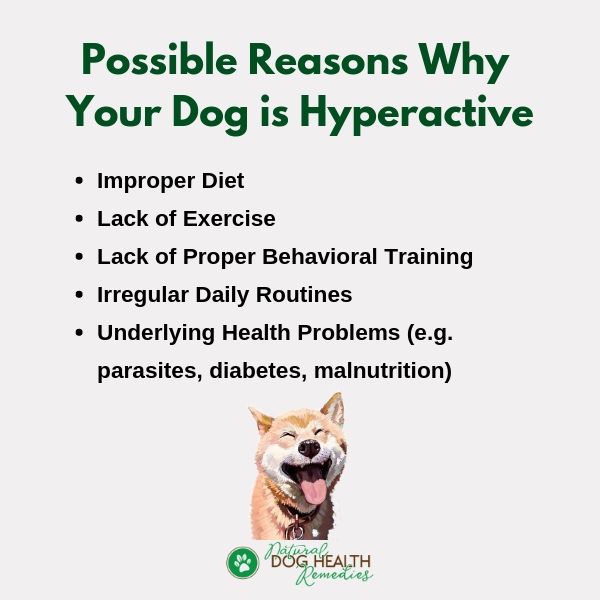
Diet
We are what we eat. So are our dogs! There is increasing evidence that animal behavior is closely related to the food consumed.
In particular, there is a direct link between sugar consumption and such behaviors as hyperactivity, restlessness, and aggression.
Other food chemicals such as preservatives, additives, and artificial colorings also contribute to hyperactivity and other abberant behaviors.
Make sure, therefore, that sugar and other food chemicals are not present in your dog's food. Consider changing the diet of your hyperactive dog to a wholesome, natural, and organic diet.
Exercise
Is your dog under-exercised or under-stimulated? Regular, daily exercise will help consume all that pent-up energy, so dig out your walking shoes and go for a 30-minute walk with your dog every day! It's good for both of you!
If you have to leave your dog home most of the day, be sure to give him some toys to play with. This will stimulate his mind and alleviate boredom.
Behavioral training
Giving your dog proper behavioral training not only will make him more obedient, but it will also stimulate his mind. In addition, it is a good opportunity for you to spend some quality time together with your four-legged friend.
Remember, training your dog takes time and patience. Try to give short, daily training sessions to your dog so neither of you will get too tired out.
Routines
 Do you have regular daily routines, or is your day usually irregular and chaotic?
Dogs feel comfortable and secured if there are routines in their lives, and they feel uncertain, frustrated and unsafe if there are such no routines on a daily basis. As a result, they may feel stressed, depressed, or anxious.
These negative feelings may in turn fester in aberrant and aggressive behaviors. It is therefore important to have regular daily routines for your dog, such as regular feeding, exercising, and training times.
Underlying physical disorders
Sometimes a dog may show aggression or other aberrant behaviors due to an underlying physiological disorder, such as diabetes, parasites, tumors, or malnutrition.
If changing your dog's diet or regular exercise cannot stop his hyperactivity, he should be checked by a veterinarian to make sure that the hyperactivity is not caused by any underlying physical disorder.

Natural Remedies to Calm a Hyperactive Dog
If your dog is "hyper" and your vet suggests conventional medication for calming hyperactive dogs (e.g. antidepressants like Prozac, or SSRI like Zoloft), don't hesitate to say "no"! Such medicines can cause a lot of undesirable side effects.
Instead, you may want to try using home remedies such as herbs and natural supplements to calm the dog down.
Please visit this page for more information.
Eldredge, et al. Dog Owner's Home Veterinary Handbook 4th edition (Wiley Publishing, 2007).
C.J. Puotinen, Natural Remedies for Dogs and Cats (Keats Publishing, 1999).