
Hip Dysplasia in Dogs
(FTC Disclosure: If you make a purchase via a link on this page, I may receive a small commission, at no added cost to you.)
Hip Joint in Dogs
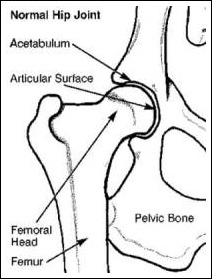
In a healthy dog, the upper end of the thighbone (which is shaped like a ball) fits snugly into the socket of the hipbone, and the ball rotates freely, smoothly, and painlessly within the socket.
The thighbone and the hipbone are shaped in such a way that they fix into each other perfectly to facilitate smooth movement.
To strengthen the joint, the two bones are held together by a strong ligament. In addition, there is a very strong band of connective tissue which encircles the two bones to provide further stability.
What is Hip Dysplasia?
Hip dysplasia in dogs is essentially a deformity of the hip joint.
In a dog with hip dysplasia, the hip socket may be too shallow to fully and firmly hold the ball-shaped thighbone, or the muscles, ligament, and connective tissue surrounding the joint may not be strong enough to hold the "ball and socket" together.
This results in pain and inflammation in one or both of the hip joints, causing difficulty for the dog to get up and walk with ease.
Hip dysplasia in dogs is a condition that can range from just a slight abnormality in the hip joint to the actual dislocation of the joint.
In extreme cases, very young puppies (around 5 months of age) will start showing signs and symptoms (e.g. limping) during and after vigorous exercise.
As time goes on and without medical treatment, these dogs may develop degeneration of the joint, arthritis, inflammation and pain. In serious cases, the dogs may not be able to walk at all.
However, more often than not, the symptoms do not start showing until the dog becomes older.
Symptoms of Hip Dysplasia in Dogs
The symptoms are very similar to that of osteoarthritis:
- Limping or walking with an abnormal gait (The dog may run with a "bunny hopping" gait).
- Reduced activities.
- Stiffness in the rear legs, especially after exercise or first thing in the morning.
- Difficulty rising or lying down or going up stairs.
- May resist movements that require full extension or flexion of the rear legs (Hip dysplasia causes pain on hip extension).
Possible Causes of Hip Dysplasia in Dogs
Heredity
Although all dogs, young and old, can develop hip dysplasia, large breed growing puppies are more prone to develop this joint problem.
In fact, many veterinarians believe that hip dysplasia in dogs is caused by heredity.
Some breeds of large dogs, such as German Shepherds, St. Bernards, Golden Retrievers, etc. are more prone to hip dysplasia. It is also said that there is a high chance that dogs with hip dysplasia will pass the condition down onto their offsprings.
Over-vaccinationMany holistic veterinarians believe that over-vaccination can increase the risk of developing hip dysplasia in dogs. They advise that if your dog is young and is genetically predisposed to hip dysplasia, you should consider not vaccinating every year.
DietFeeding a diet that has too much or too little calcium or other minerals can also have a detrimental effect on the development of the hip joint.
In addition, vitamin deficiencies (especially vitamin C) can also cause canine hip dysplasia.
Dogs who are fed low-quality commercial pet food are at higher risk of suffering from nutritional deficiencies.
Feeding a dog an unbalanced home-made diet also risks nutritional imbalance/deficiencies. It is therefore important that you use recipes designed by holistic vets or qualified canine nutritionists to make sure that your dog is getting all the nutrients, essential minerals, and vitamins he needs.
ObesityIt is easy to understand that if a dog is obese, the extra weight will put more stress on the legs and joints supporting the body, thus exacerbating degeneration of the joint in a dog with hip problems.
ExerciseFor young growing puppies, especially those who are predisposed to hip dysplasia, the type and the amount of exercise is important. Any activities that put a lot of force on the joints are not good. One such activity is playing Frisbee.
For dogs prone to hip dysplasia, exercise should be moderate and focused on developing, strengthening, and maintaining good muscle mass, such as running and swimming.
Conventional Treatment for Hip Dysplasia
Conventional treatment includes surgery (e.g. Triple Pelvic Osteotomy, Total Hip Replacement, Femoral Head Ostectomy), and/or pain-relief and anti-inflammatory medications, weight management, and oral supplements.
Natural Remedies for Dogs with Hip Dysplasia
Quite a few natural remedies and supplements can be used to help repair joint tissue damage and to relieve pain and inflammation caused by the condition.
Glucosamine and ChondroitinThese supplements are effective for arthritis due to wear-and-tear joint deterioration both in people and dogs. Visit this page for more information.
MSM (Methyl-sulfonyl-methane)MSM is anti-inflammatory and is effective in relieving pain and inflammation in the joints. Visit our page on MSM for Dogs for more information.
Fatty AcidsFatty acids are found to be effective in reducing the inflammation associated with arthritis and hip dysplasia. Click here for more information.
Vitamins C and EPain of hip dysplasia in dogs is very often caused by inflammation both inside and surrounding the joint. Vitamins C and E have been found to reduce inflammation and cartilage damage, so it is advisable to give vitamins C and E to a dog with hip pain.
Colostrum Colostrum is the protein-rich pre-milk fluid produced from a mother's mammary glands during the first 72 hours after birth.
It has been found to be highly nutritious; it contains immune and growth factors, enzymes, proteins, and many other beneficial substances.
Colostrum has been used by holistic veterinarians to treat a lot of dog health problems. For example, joint problems (e.g. hip dysplasia, osteoarthritis, etc,) respond well with supplementation of colostrum.
The growth factors in the colostrum help facilitate the body to regenerate cells. It also helps absorption and utilization of other supplements such as glucosamine.
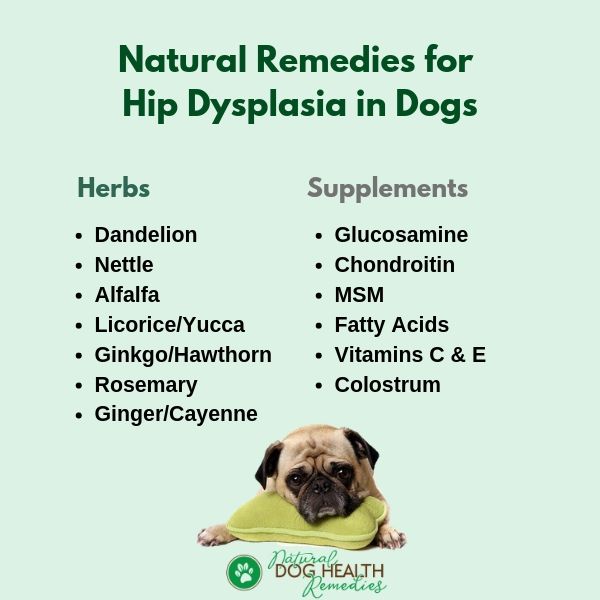
HerbsSome herbs are effective in controlling and managing pain and inflammation caused by arthritis, some are nutritive, and others can promote blood circulation. For example:
- Dandelion/Nettle: These herbs are rich in minerals and vitamins and are effective in helping joint repair as well as removal of metabolic wastes from the body, which otherwise may contribute to solid buildups in the joints.
- Alfalfa: Alfalfa has long been considered as one of the most effective herbs for relieving pain and discomforts resulting from arthritis. It also helps with the transport of systemic waste from body tissues.
- Licorice/Yucca: These herbs have anti-inflammatory properties and can relieve pain of arthritis and hip dysplasia in dogs.
- Ginkgo/Hawthorn/Rosemary: These are tonic herbs that are effective in improving blood circulation. An increase in blood flow in the tissues surrounding the painful joints will result in more flexible muscles and less stiffness.
- Cayenne/Ginger: These herbs also help increase blood circulation by slightly dilating the blood vessels and capillaries.

Natural Products for Dogs with Hip Dysplasia
Agile Joints for Dogs
This herbal formula contains guggul (an Ayurveda herb that has powerful anti-inflammatory properties), cayenne, alfalfa, ginger, and astragalus. It is very effective in pain relief. It can also reduce and calm joint inflammation caused by joint problems such as hip dysplasia in dogs.
Zukes Hip Action Dog TreatsThis supplement is not only effective but delicious!
It contains Chondroitin and Glucosamine, as well as other nutrients such as vitamins (C and E), minerals (e.g. copper, zinc, selenium, manganese) and amino acids.
These nutrients all help the delivery of Chondroitin and Glucosamine to the affected hips and joints. The supplement comes in three different yummy flavors - chicken, beef and peanut. Your dog will love it!
Symbiotics Colostrum Plus Dog & Cat SupplementThis colostrum supplement can be used in conjunction with any of the above supplements to facilitate quick and better effects.
Things We Can Do
There are several things that we can do to help our dogs if they are suffering from hip dysplasia. For example:
Keep the Dog's Weight DownObesity can aggravate the condition of hip dysplasia in dogs. If your dog has hip dysplasia, therefore, try to keep her slim. If necessary, consult a veterinarian about putting her on a special diet or weight-loss program.
Regular ExerciseExercising daily is important but not all exercises are the same. For dogs with hip dysplasia, choose exercises that can:
- provide for good range of motion;
- build muscle;
- limit wear and tear on the joints.
Examples:
- Walking
- Swimming
- Slow jogging
If you are unsure as to which exercise is the most appropriate for your dog, consult with your veterinarian.
Keep the Dog Warm and ComfortableDogs with arthritis and hip dysplasia should be kept warm as the cold and damp will aggravate the pain. If necessary, put a sweater on your dog when going outside, and get your dog a blanket at night.
A bed with good support is also important for a dog suffering from hip or joint pain. An orthopedic foam bed can help dogs with arthritis.
ReferencesEldredge, et al. Dog Owner's Home Veterinary Handbook 4th edition (Wiley Publishing, 2007).
R.H. Pitcairn, The Complete Guide to Natural Health for Dogs and Cats (Rodale, 2005).
K. Schulz, DVM, The Pet Lover's Guide to Canine Arthritis & Joint Problems (Saunders Elsevier, 2006).
W.J. Dodds, D.R. Laverdue, Canine Nutrigenomics - The New Science of Feeding Your Dog for Optimum Health (Dogwise Publishing, 2015).