Why Is My Dog Sneezing Repeatedly?
Overview
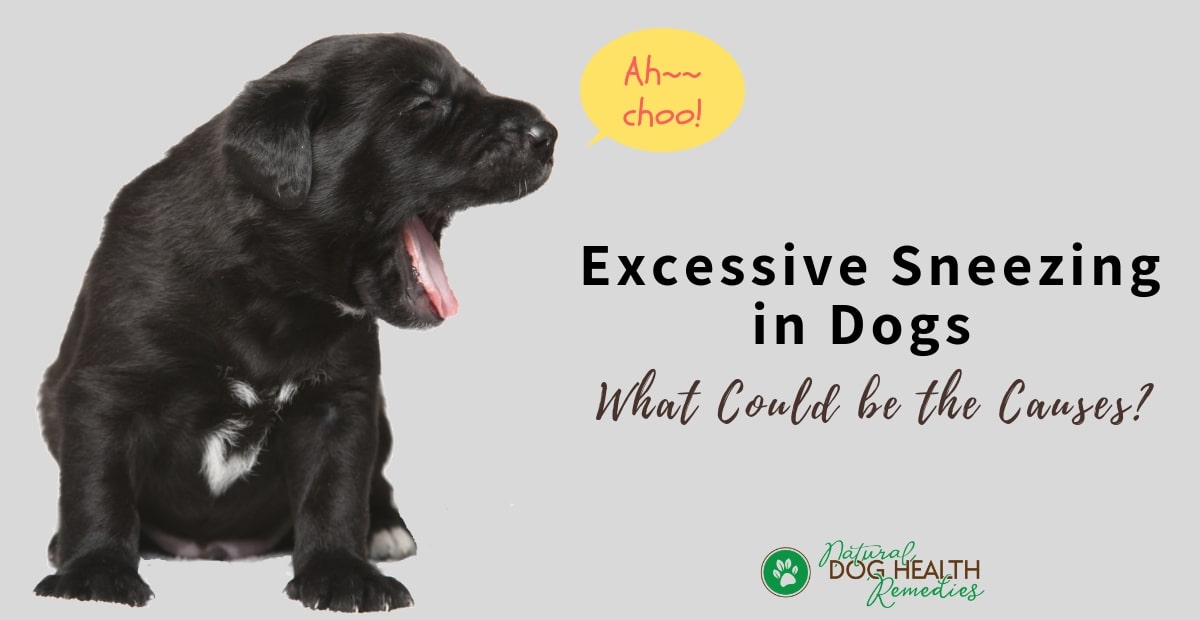
At one point or another, we have all probably asked the question, "why does my dog keep sneezing?"
Dog sneezing is a symptom, not an illness by itself. So instead of just using drugs to suppress the symptom, it is important to find out and deal with the underlying cause that makes your dog sneeze.
There are also natural remedies that can be used to ease sneezing and boost the immune system.
What Does It Means When Your Dog Sneezes A Lot?
More often than not, dogs sneeze in order to get rid of infectious organisms such as bacteria and viruses. Sometimes, they sneeze to expel foreign bodies that have found their way up their nostrils.
Here are some common causes of dog sneezing:
- Viral Infections: Upper respiratory tract infections caused by airborne virus, such as parainfluenza virus, can cause symptoms such as sneezing, coughing, wheezing.
- Bacterial Infections: Upper respiratory tract infections caused by bacteria, such as Bordetella (the bacteria that causes kennel cough), Streptococci, etc. also cause symptoms such as sneezing, coughing, etc.
- Allergies: Allergies caused by pollens or mold can make a dog sneeze repeatedly. Usually the sneezing is accompanied by excessive scratching, paw chewing, licking, and watery eyes.
Allergies can also be caused by household chemicals and other products such as perfumes, cigarette smoke, etc. All these can cause a dog to sneeze suddenly and repeatedly.
- Foreign Bodies: Foreign bodies, such as foxtails, dead bugs, small sticks, tinsels, etc. may sometimes find their way up the nasal passage of a dog, causing irritation resulting in violent sneezing.
- Nasal Tumors: If a dog has a nasal tumor, he will also sneeze and the sneezing is usually accompanied by bloody nasal discharge from one side of the nostril.
- Tooth Abscesses: If an upper canine tooth becomes infected and a tooth abscess is formed, sneezing and nasal discharges are common signs.
- Breed Characteristics: Dogs with short snout such as pugs, bulldogs, Pekingese, etc. are more likely to sneeze due to infection or irritating products.
- Excitement or Embarrassment: Did you notice that when dogs are excited or embarrassed, they tend to sneeze? Some dogs sneeze when they are excited about food, car rides, etc. Other dogs sneeze when they are embarrassed (my dog would sneeze and look really embarrassed after farting!)
What is Reverse Sneezing?
Reverse sneezing happens quite commonly in small dogs and Brachycephalic breeds (e.g. pugs, bulldogs), but it could happen to other bigger dogs as well. (My dog sometimes had reverse sneezing when she was young.)
When dogs (and we) sneeze, air is forced out through the nose. But in the case of a reverse sneeze, air is pulled in through the nose in a forceful and noisy way.
Here is an example of an episode of reverse sneezing:
Reverse sneezing is actually caused by a spasm of the throat and soft palate.
But what may trigger the spasm?
There are many possible triggers, including something as simple as a tight collar or pulling on the leash, or over-excitement. Sometimes, the trigger could be an irritant, such as a household cleaner or room spray.
Usually, the reverse sneezing will stop in a minute or so. When my dog had that, I usually tried to calm her down by lightly stroking her back and her throat.
Most cases of reverse sneezing do not require treatment, but if your dog constantly has this problem and if the episodes are getting longer and more frequent, you may want to talk to your vet to see if anything is wrong.
Pinpointing the Possible Cause of Dog Sneezing
Here are some questions that may be helpful in pinpointing the possible cause that brings about sneezing in your dog:
- Does the sneezing happen right after a walk in the woods? (Possible cause: foreign bodies in the nostril)
- Does the sneezing begin suddenly and is the sneezing violent? (Possible cause: foreign bodies)
- Does the sneezing happen only in spring or early summer? (Possible cause: seasonal allergy)
- Are the sneezing fits triggered by eating? (Possible cause: food allergy)
- Is the nasal discharge only one-sided? (Possible causes: tumor, tooth abscess, foreign bodies)
- Is the nasal discharge bloody? (Possible causes: foreign bodies, tumor, tooth abscess)
- Is the sneezing accompanied by fever? (Possible causes: tumor, upper respiratory tract infection)
When To See A Vet
Take your dog to the vet immediately if:
- the nasal discharge is bloody
- the discharge obstructs breathing
- the sneezing continues for more than 3 days, and occurs more than 3-4 times a day
- the dog is weak and cannot eat because of the sneezing
Homeopathic Remedies for Dog Sneezing
 Homeopathic remedies are effective in alleviating the discomfort caused by dog sneezing. There are quite a few remedies can be used depending on the specific symptoms.
If you want to use homeopathic remedies for your dog's sneezing fits, consider the following. If you are still unsure, consult a holistic vet.
Arsenicum albumThis remedy is indicated for dogs with much sneezing, watery discharge which is a little corrosive, and the nasal passages may be painful to touch. The dogs are restless and thirsty, and are often very skittish.
Allium cepaThis remedy (made from red onions) is suitable for dogs with watery eye and nose discharges, red eyes, and frequent sneezing. The eye discharge is often bland, while the nasal discharge burns the nose and the upper lip.
Aconitum napellusDogs requiring this remedy have sudden onset of symptoms - sore, red, watery eye; sneezing with little nasal discharge; dry coughing; and they show great fear and anxiety. The symptoms tend to worsen in a warm room.
Calcarea sulphuricaThis remedy is useful if your dog has thick, lumpy, yellow mucous discharges from his nose and/or eyes. Sometimes the yellow discharge from the nose may be blood-tinged. Calcarea sulphurica is often used to encourage respiratory health and promote the health of the throat and nasal passages.
Hepar sulphurisThis remedy is suitable for dogs with an upper respiratory infection that has progressed to the point of sore. The nostrils can sometimes become ulcerated and there is a foul-smelling discharge from the nose.
Kali bichromicumThis remedy is suitable for dogs with greenish-yellow, elastic, ropy discharge from the eyes and nose. They also develop tough crusts on the outer portion of the nostrils that are difficult to remove. Breathing through the nose is difficult and violent sneezing often occur as a result. They may also have a sore throat which makes swallowing difficult. The symptoms are usually better in warm conditions and worse in the morning.
SulphurThis remedy is indicated for dogs with watery, irritating, and sometimes yellowish nasal discharges. Sneezing is frequent, and the dogs may also rub the nose and the eyes because of the burning irritation. They are thirsty and have poor appetite. Early morning tends to be the worst.
PulsatillaDogs needing this remedy are not thirsty; they are affected with bland, greenish-yellow nasal discharges that obstruct the nose and fill the eyelids. Besides sneezing, the dogs also have itchy eyes and an irritating cough. The symptoms worsen in a warm, stuffy atmosphere and in the evening.
Other Dog Sneezing Home Remedies
- Ointments of Calendula or Aloe: If your dog's nose becomes red and irritating because of the nasal discharges resulting from sneezing, apply an ointment of either calendula or aloe to the affected area(s).
- Herbs: Immune-boosting herbs, such as echinacea can be fed to your dog for a week to boost his immune system.
- Antioxidants: Vitamins C and E are antioxidants and are effective in reduce the intensity of the inflammation.
- Natural Antihistamines: If your dog's sneezing is caused by allergies, try using so natural antihistamines to ease his sneezing and other allergy symptoms. Read this article for more information.
C.J. Puotinen, Natural Remedies for Dogs and Cats (Keats Publishing, 1999).
M.L. Wulff-Tilford and G.L. Tilford, Herbs for Pets (Bowtie Press, 1999).
M. Goldstein, The Nature of Animal Healing (Ballantine Books, 2000).
R.H. Pitcairn, The Complete Guide to Natural Health for Dogs and Cats (Rodale, 2005).
D. Hamilton, Homeopathic Care for Cats and Dogs (North Atlantic Books, 1999).