
Is Your Dog Suddenly Peeing A Lot?
Overview
Urination problems are common in dogs (and cats too). One such problem that some dog parents have experienced is frequent urination.
If your dog is fully house-trained, but is recently starting to pee a lot to the point that he may even be having "accidents" in the house, or if your dog is trying and straining to pee all the time, pay attention!
Dog frequent urination is usually a sign of illness.
Of course, sometimes there are other less serious reasons, such as the dog may simply be drinking more water as a result of the weather, changes in diet, or exercise routine.
Why Does My Dog Pee So Much?
Quite a few health problems can cause a dog to suddenly pee a lot. For example:
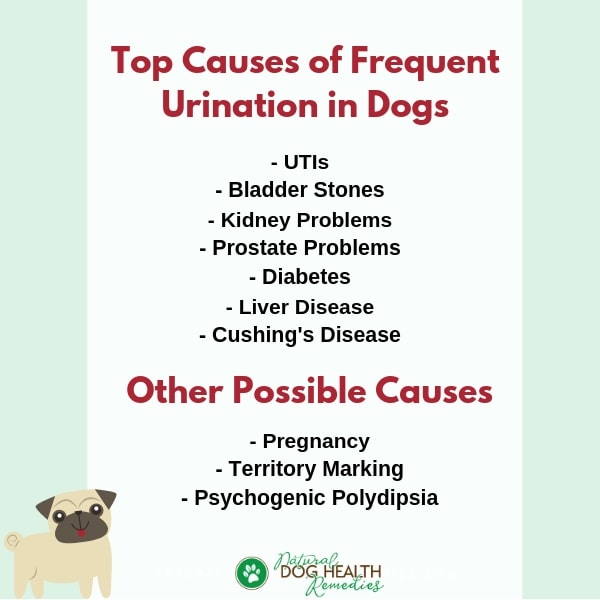
- Urinary Tract Infection: Female dogs are more susceptible to urinary tract infections. Watch out for other UTI symptoms such as straining to pee, or blood in urine. The dog may be lethargic and may also have a fever.
- Bladder Stones: Frequent urination and bloody urine may also indicate bladder stones. The symptoms are similar to those of UTIs. So immediate checkup is necessary for a proper diagnosis.
- Kidney Problems: If your dog is urinating frequently pale clear urine, it could mean that her kidneys are not working properly due to hormonal imbalance (this occurs more often in older dogs), or she may even be suffering from chronic kidney failure.
- Prostate Problems: If your male dog is urinating more frequently and is also straining to pee, he may have some kind of prostate problems, such as prostate enlargement (more common in older intact male dogs), or bacterial infection causing inflammation (usually the urine will be bloody).
- Diabetes: If your dog is peeing a lot because she is drinking more water, there is a possibility that she has diabetes. Usually, a diabetic dog has a good appetite, eats more, but loses weight.
- Cushing's Disease: Most cases of Cushing's disease (about 85%) are the result of a benign tumor in the pituitary gland. The disease usually affects older dogs. Besides frequent urination, a dog with Cushing's disease also tends to drink and eat more, has weak muscle tone and a sagging pot belly, pants excessively, and sometimes suffers from hair loss.
- Liver Disease: Dogs with some form of liver disease (e.g. inflammation, liver shunt) drink a lot and pee frequently as a result. Dogs with liver problems also show symptoms such as lack of appetite, lethargy and weakness, diarrhea and vomiting.
If you suspect your dog's frequent urination is caused by any of the above illnesses, take her to the vet for immediate checkup and treatment.
Other Possible Causes
Sometimes a dog peeing frequently may not be the result of a physical illness. It may be due to:
- Pregnancy: If your intact female dog is peeing more frequently, there is a chance that she might be pregnant! The growing fetuses are occupying more room in her abdomen, leaving little space for pee to fill in the bladder, resulting in more frequent urination. Alternatively, she might be coming into "heat". The hormonal changes related to the estrous cycle may cause the dog to pee more often.
- Territory Marking: If your intact male dog is urinating frequently in small amounts, he might just be marking his territory - this could be a response to a nearby female dog coming into "heat".
- Psychogenic Polydipsia: A dog with this problem compulsively drinks a lot of water, which naturally results in excessive peeing. Why would a dog display this strange behavior? No one knows for sure - the guess is it's due to boredom or stress. Distracting the dog (e.g. by taking long walks, playing games, etc.) may help solve the problem.
What To Do If Your Dog Pees A Lot
The first thing to do if your dog is peeing more frequently than normal, is to make a mental note of any possible changes in his diet or daily routine.
As mentioned above, sometimes a change in his food or the weather may cause him to drink more water and pee more as a result.
If you cannot think of any lifestyle changes that may have caused your dog to urinate more, look at the above possible causes. Try to find other dog illness symptoms that your dog may be showing so that you can tell your veterinarian.
Also, if possible, try to collect a urine sample of your dog for your vet to do a urinalysis.
How to Collect a Dog Urine Sample
(Wear rubber gloves to avoid getting any urine on yourself!)
- For female dogs: Slide a clean aluminum pie plate beneath the dog as she squats.
- For male dogs: Use a clean glass container to catch urine midstream.
Take the urine sample to the vet as soon as possible (it should not sit more than a few hours) since the urine changes with time and temperature.
A Natural Product for Dog Frequent Urination
(FTC Disclosure: If you make a purchase via this link, I may receive a small commission, at no added cost to you.)
This combined herbal and homeopathic formula is effective in relieving dog frequent urination brought on by excitement, physical exertion, urinary tract infections, or aging.
Many dog parents have used this natural product with good results. One dog parent said that it worked within 48 hours. Another said a week after using this product, her dog had not had an accident... So if your dog is peeing a lot and you would like to try something natural, check this formula out.
Eldredge, et al. Dog Owner's Home Veterinary Handbook 4th edition (Wiley Publishing, 2007).
Merck Publishing and Merial. The Merck/Merial Manual for Pet Health (Merck, 2007).